
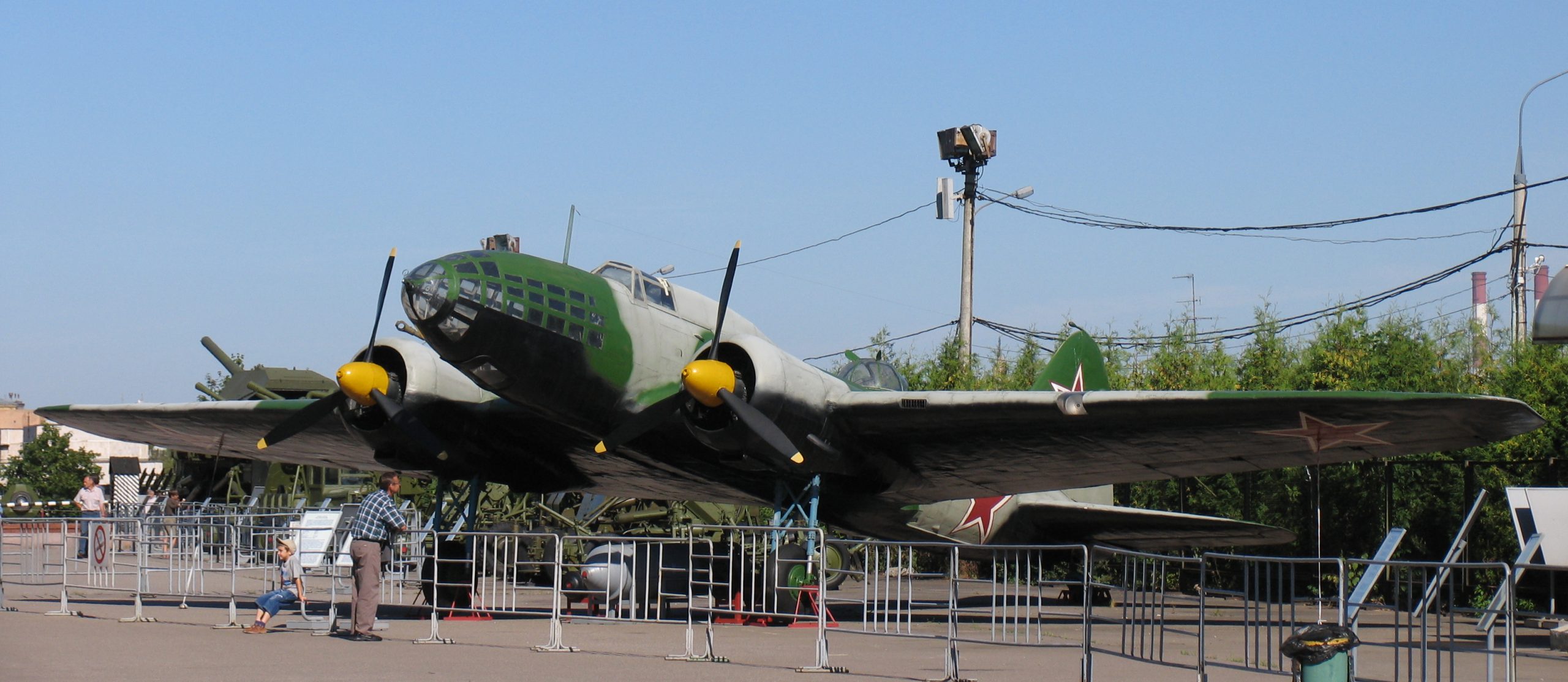
Ilyushin Il-4
“DB-3F”
The Soviet long-range bomber that carried the first Red-Army bombs to Berlin in August 1941 — a slab-sided, hard-flying workhorse that hauled the war deep behind German lines and struck enemy ships as a naval torpedo-bomber.
Ilyushin Il-4: the bomber that first struck Berlin
The Ilyushin Il-4 began life in the mid-1930s as the DB-3 — Dalniy Bombardirovshchik, “long-range bomber” — the first modern long-range bomber of Sergei Ilyushin’s design bureau. Sleek for its day, it set a series of long-distance records in the hands of test pilot Vladimir Kokkinaki, including celebrated 1938–39 flights in the specially prepared “Moskva.” But the DB-3 was also complex and costly to build, and by the end of the decade Ilyushin had reworked it into the simpler, more aerodynamic DB-3F, with a redesigned glazed nose and new engines. In 1942, under the Soviet system of naming aircraft after their designers, the DB-3F was redesignated the Il-4.
It was never a fast or comfortable aircraft. Powered by two Tumansky M-88B air-cooled radials of about 1,100 hp each, the Il-4 topped out around 410–430 km/h and was notoriously demanding to fly — heavy on the controls, directionally twitchy, and dangerous on one engine. Its defensive armament was light, usually just three machine guns, which left it desperately vulnerable to fighters by day. What it offered instead was reach: the ability to carry a useful bomb load far beyond the front line, and to loiter deep in enemy airspace at night.
That reach produced the Il-4 family’s most famous exploit. On the night of 7–8 August 1941, with the Wehrmacht driving toward Leningrad and Moscow, a handful of DB-3 bombers of the Soviet Baltic Fleet, led by Colonel Yevgeny Preobrazhensky, took off from a rough strip on the Estonian island of Saaremaa and bombed Berlin — the first Soviet bombs to fall on the German capital. The physical damage was slight, but at the lowest point of the war the propaganda value was immense: proof that the Soviet Union could still reach Hitler’s capital.
Through the rest of the war the Il-4 was a mainstay of Soviet Long-Range Aviation, flying night bombing missions across the Eastern Front, and of naval aviation, where the torpedo-carrying Il-4T attacked shipping and laid mines in the Baltic, Black Sea and far north. Slab-sided and unglamorous, it was built in large numbers — roughly 5,256 Il-4s, and over 6,700 counting all DB-3 variants — and soldiered on into the early 1950s. It remains one of the essential, if unloved, aircraft of the Soviet war effort.
01The Ilyushin Il-4’s first raid on Berlin: the Baltic Fleet’s answer in the summer of 1941
When Germany invaded in June 1941, Soviet cities were soon under German bombs and the front was collapsing. As a riposte, the Soviet high command ordered a symbolic strike on Berlin itself. The job fell to the naval aviators of the Baltic Fleet’s 1st Mine-Torpedo Aviation Regiment, flying DB-3 bombers (the immediate ancestor of the Il-4) from Kagul airfield on the island of Saaremaa — then almost the only Soviet-held ground within striking range of the German capital.
The raids were flown at the very edge of the aircraft’s range: a round trip of well over 1,500 km, mostly over the sea, at night, heavily loaded and lightly defended. The first mission on 7–8 August 1941 put a small number of bombers over Berlin; further raids followed through late August and early September, including larger efforts, until the Germans overran Estonia and took the island bases away. The tonnage dropped was tiny, but the message was not: several airmen, including Preobrazhensky, were made Heroes of the Soviet Union, and the raids became one of the enduring legends of the Il-4 family.
What makes the Ilyushin Il-4 special
From DB-3 to Il-4: an evolved long-range bomber
The Il-4 was not a new design but the mature form of the DB-3 of 1935. Ilyushin simplified the difficult, labour-intensive structure, fitted a cleaner fully-glazed nose and new engines to create the DB-3F, which was renamed Il-4 in 1942. The result was easier to mass-produce and had the long legs the Soviet Union’s bomber force badly needed.
Two Tumansky M-88B radials — range over speed
Power came from two Tumansky M-88B two-row radial engines of roughly 1,100 hp each. They gave the Il-4 impressive range but only modest speed, and the aircraft was underpowered and tricky if one failed. Endurance, not performance, was the whole point: the Il-4 was built to reach targets nothing else could.
Lightly armed and demanding to fly
The Il-4 carried only about three machine guns for defence and was hard work in the air — heavy-handling, directionally unstable and unforgiving. Vulnerable to fighters by day, it did most of its work at night. Crews respected its toughness and reach, but few called it pleasant to fly.
02The Ilyushin Il-4 as a torpedo-bomber: Soviet naval aviation’s long arm
Alongside its work as a land bomber, the Il-4 was the backbone of Soviet naval strike aviation. The torpedo-carrying Il-4T could sling a single large aerial torpedo of around 940 kg under the fuselage, or carry mines and bombs, and flew anti-shipping and mine-laying missions with the Baltic, Black Sea and Northern Fleets. Attacks were pressed home at low level against convoys and warships — dangerous work in an aircraft that was neither fast nor agile — and the type gave the Soviet navy a reach it otherwise lacked. It is telling that the very first Berlin raids were flown by naval torpedo-bomber crews.
03The Ilyushin Il-4’s reputation: a hard aircraft that crews still trusted
Pilots who flew the Il-4 remembered it as a handful. The controls were heavy, the aircraft wandered directionally, and an engine failure on take-off could be lethal; training losses were high. Yet it was also rugged, could absorb damage, and above all it could go the distance. For a bomber force that spent much of the war short of modern equipment, that combination of long range and durability mattered more than comfort or speed, and the Il-4 remained a front-line type from 1941 until the war’s end.
Ilyushin Il-4 full specifications
Baseline note: the figures below describe a production Il-4 as State Aircraft Factory No. 126 at Komsomolsk-on-Amur was building it in 1943–44 — two Tumansky M-88B radials, the UTK-1 dorsal turret with a 12.7 mm UBT, the wartime wooden navigator’s nose and plywood wing skinning, and the "swept-tip" outer wing panels introduced in 1943. Deltas for the original 1936 DB-3, for the 1940 DB-3M and DB-3F, and for the all-metal early Il-4 are given in grey. Three honest cautions. Maximum speed is quoted at 404, 406 and 410 km/h by different authorities, all for aircraft nominally of the same standard, and the spread is real: build quality between the four factories varied enormously and a wooden-nosed machine was measurably slower than a metal one. Maximum take-off weight is worse — Western tables print 12,120 kg while Russian sources give a design maximum of about 10,150 kg, a gap of two tonnes that almost certainly separates a maximum overload figure from a normal loaded one; both are shown rather than averaged. And the production total is not settled: the usual headline is 5,256 Il-4 and DB-3F, while the Russian factory-by-factory table adds to 5,359. Add roughly 1,528 DB-3s and the family total is somewhere near 6,800.
Dimensions & weights
- Crew
- 4 — pilot, navigator/bomb-aimer, radio operator/dorsal gunner, ventral gunner — the DB-3 and the earliest DB-3Fs flew with three, the ventral hatch gun being added only from 1940 after the blind spot below and behind proved fatal
- Length
- 14.76 m (48 ft 5 in); Russian sources round to 14.8 m. The DB-3 was 14.22 m (46 ft 8 in) — the DB-3F’s longer, glazed spindle nose accounts for the difference
- Wingspan
- 21.44 m (70 ft 4 in) — unchanged from the DB-3, though the DB-3F wing was a new structure with a new aerofoil and greater area
- Height
- 4.10 m (13 ft 5 in), tail down
- Wing area
- 66.70 m² (718.0 sq ft), against 65.6 m² (706 sq ft) on the DB-3B
- Structure
- All-metal duralumin stressed skin as designed: oval-section fuselage on 34 frames, two-spar wing in five removable sections — but from 1942 the navigator’s nose was built of wood and the outer wing panels were skinned in plywood, and an NKAP order of 27 March 1943 made plywood skinning standard at every factory
- Empty weight
- 5,800 kg (12,787 lb) for a metal aircraft; Russian data give a spread of 5,564 to 5,800 kg. An M-88B machine with the wooden navigator’s cabin and plywood wing skinning weighed 6,421 kg (14,156 lb) — the aluminium shortage cost roughly 620 kg (1,370 lb) of empty weight, which is the single most important number on this page
- Loaded weight
- about 10,055 kg (22,167 lb) at normal load with 1,000 kg of bombs
- Maximum take-off weight
- 12,120 kg (26,720 lb) in Western tables; Russian sources give a design maximum of about 10,150 kg (22,380 lb), and 11,500 kg (25,350 lb) for the experimental M-82 aircraft built at Factory No. 126 in 1942. See the baseline note
- Wing loading
- 151 kg/m² (30.9 lb/sq ft) at 10,055 kg — modest, which is why the aeroplane got airborne at all once the wooden parts had added their weight
- Internal fuel
- ~3,855 litres (~848 imp gal, ~1,018 US gal) in six self-sealing tanks, about 2,890 kg (6,370 lb) of petrol, with an inert-gas system to blanket the ullage. From 1942 fibre drop tanks added roughly an hour and a half of endurance
- Bomb load
- 1,000 kg normal, ~2,500 kg maximum (2,205 lb / ~5,510 lb); some sources quote 2,700 kg (~5,950 lb). The calculated maximum useful load over 500 km was 2,766 kg, and that figure includes the crew, their parachutes, all guns and ammunition
Performance
- Maximum speed at altitude
- 410 km/h (255 mph, 221 kn) at 6,500 m (21,330 ft) in the standard Western table; Russian testing of a 1944 Komsomolsk-built M-88B aircraft gave 406 km/h at 6,000 m, and 404 km/h is also widely printed. The late-production DB-3 with M-88 engines had managed 429 km/h at 6,800 m — the Il-4 was the slower aeroplane
- Maximum speed at sea level
- 332 to 379 km/h (206 to 235 mph) depending on engine standard, propeller and how much of the airframe was wood — an unusually wide band, and an honest one
- Average speed, Berlin sortie
- about 250 km/h (155 mph) — derived, not published: 1,765 km flown in roughly seven hours on the night of 7/8 August 1941, at high altitude and low cruise power to stretch the fuel
- Rate of climb
- 4.4 m/s (866 ft/min) at low level — sluggish, and worse still at overload weights
- Time to 5,000 m
- 13.6 min (to 16,400 ft)
- Service ceiling
- 8,700 m (28,540 ft); Russian sources give a range of 8,300 to 9,400 m (27,230 to 30,840 ft) across marks, with 10,050 m (32,970 ft) recorded by a 1940-built DB-3M on M-88s. The Berlin raids were flown at 7,000 m (22,970 ft)
- Range, maximum fuel
- 3,800 km (2,360 miles, 2,050 nmi) in the Western table; Russian sources give 3,000 to 3,300 km (1,860 to 2,050 miles) for service aircraft, which is closer to what regiments actually flew
- Range with 1,000 kg of bombs
- 2,600 km (1,620 miles, 1,400 nmi)
- Combat radius demonstrated
- ~900 km (~560 miles, ~486 nmi) each way — Saaremaa to Berlin, 1,765 km there and back, 1,400 km of it over open sea with no diversion field
- Endurance
- up to 12 hours on a full-radius sortie — in an unheated cabin, on oxygen, with no autopilot on most aircraft and an aeroplane that would not hold a heading unaided
- Stability
- Poor in every axis, and the defining flying quality — "the controls could not be released for a second", wrote V. V. Reshetnikov; crews carried smelling salts against the hypnotic effect of hours of continuous corrections. The 1943 swept-tip outer wing shifted the centre of gravity aft and improved matters, but never cured them
Propulsion & systems
- Engines
- 2 × Tumansky M-88B, 14-cylinder twin-row air-cooled radials — a licence descendant of the Gnome-Rhone 14K Mistral Major bought by the USSR in 1933 and developed through M-85, M-86, M-87 and M-88. Early DB-3Fs flew on the M-87B and were designated DB-3M
- Engine data
- 38.65 litres (2,359 cu in), compression ratio 6.1, reduction gear 2/3, dry weight 684 kg (1,508 lb) for the M-88B
- Power ratings
- 1,100 hp for take-off, five minutes maximum (820 kW); 950 hp nominal at sea level in low blower, 1,100 hp at 4,000 m in low blower and 1,000 hp at 6,000 m in high blower. The M-87B gave only 950 hp for take-off
- Propellers
- VISh-3 three-blade variable-pitch, 3.25 m diameter (10 ft 8 in) on early aircraft; VISh-23T of 3.4 m (11 ft 2 in) later, and from October 1944 the UF-61-11F propeller that could be feathered after an engine failure — before that, losing an engine on a loaded aircraft was frequently fatal
- Fuel system
- Six semi-rigid welded tanks in four consumption groups, self-sealing, with internal fire baffles and cable-operated emergency dumping from the outer tanks — switching between groups was entirely manual, and pilot training included two dedicated sorties on getting the sequence right, because getting it wrong left usable fuel in the wing
- Oil system
- Two independent pressure systems, one per engine, with 144-litre tanks (32 imp gal each) and honeycomb coolers in the wing leading edge; a worn M-88B could burn 300 cm³ of oil an hour
- Air system
- A single 12-litre bottle charged to 150 atm, stepped down to 35 atm, worked the undercarriage and the Zapp landing flaps — with a hand winch in the cockpit for emergency extension, and separate 25 to 30 atm bottles for the wheel brakes
- Undercarriage
- Retractable mainwheels folding aft into the nacelles, 1,000 × 350 mm tyres, fixed tailwheel — the mainwheel protruded below the closed nacelle so that a wheels-up landing rode on the tyre. Brake failures and undercarriage damage were among the type’s chronic complaints
- Autopilot
- AVP-12 hydraulic, provision made on every production aircraft, fitted to very few — only about 60 Il-4s in the entire fleet had one by the end of 1942, and it was not to be used in turbulence. On one engine, sustained flight was "practically impossible without the navigator taking the second set of controls"
- Navigation & sighting
- RPK-2 radio compass with a loop fairing above the fuselage, APG-1 course-holder from 1943, OPB-2M optical bomb sight with the NKPB-3 night sight added, PTN-5 sight for torpedo drops — and GAM-9 exhaust flame dampers from the 127th production series, without which a night bomber advertises itself
- Crew comfort
- None to speak of — no cabin heating of any kind, oxygen masks above 4,000 m, and outside air temperatures of −35 to −40 °C on the high-altitude sorties that froze cockpit glazing and goggles alike
04The Ilyushin Il-4’s cost: why no dollar price exists
The Il-4 was a wartime Soviet state product, built to plan and never sold on an open market, so a firm flyaway unit price simply does not exist in the public record — and no credible cost-per-flight-hour figure exists for the type either. Its cost was reckoned in rubles, labour-hours and scarce materials inside a command economy fighting for survival, not in dollars. Any precise price you see attached to an Il-4 today is, in practice, a modern estimate rather than a sourced historical figure.
Armament & payload
The Il-4 could carry a 940 kg torpedo, and defended itself with three machine guns
That sentence contains the whole argument about this aeroplane. Offensively the Il-4 was generous for a twin: 1,000 kg of bombs as a normal load and about 2,500 kg at a stretch, spread across two cassette racks on the centreline of the bomb bay, two heavy racks under the fuselage and four light racks under the wing centre section, plus a torpedo bridge under the belly for the naval regiments. Defensively it was equipped to a 1936 standard and never really caught up. The DB-3F entered the war with two rifle-calibre ShKAS machine guns, and the earliest aircraft had no ventral gun at all — a blind spot below and behind that German fighter pilots found within days.
The fixes came, slowly. A hatch mounting was added below, first the old LU pintle from the DB-3B and then the MV-2; the dorsal SU turret gave way to the MV-3, and from the spring of 1942 to the UTK-1 with a 12.7 mm Berezin UBT and 200 rounds. Armour plate went in around the gunners once it became clear the gunners were what fighters shot at first. Even complete, three guns firing over a hemisphere was thin protection for a four-man crew, and the honest conclusion is that the Il-4 survived by flying at night. When it was used by day — as it was, disastrously, in the summer of 1941 — it was slaughtered.
The naval variant is where the aeroplane earned its reputation. The DB-3T, later Il-4T, carried a T-18 external torpedo bridge for one 45-36AN low-level torpedo or one 45-36AV with a parachute container for high-altitude dropping, or a mine rack for MAV-1 and AMG mines. Fits varied by factory, by production series and by whether a given airframe had been through a modernisation team; land-based Il-4s were handed to naval regiments throughout the war and converted as circumstances allowed, so no single armament table is true of the whole fleet.
Gun
- 1 × 7.62 mm ShKAS in the NU 5T251 ball mount in the navigator’s nose, 1,000 rounds
- 1 × 7.62 mm ShKAS in the shielded SU 5T211 dorsal turret, 1,000 rounds; replaced by the MV-3 turret with the same gun and 1,200 rounds
- 1 × 12.7 mm Berezin UBT in the UTK-1 dorsal turret with 200 rounds, from the spring of 1942 — the single most useful defensive change made to the type
- 1 × 7.62 mm ShKAS in the ventral hatch: the LU 5T231 pintle with 500 rounds, later the MV-2 mounting with 750 rounds. Early DB-3Fs had nothing at all in this position
- The MV-2 and MV-3 mountings were designed by Mozharovsky and Venevidov at OKB-2 of Factory No. 32 — competent gunnery engineering fitted to an aeroplane that needed more guns than it could carry
Air-to-air
- No air-to-air weapon was carried, and none existed for Soviet bombers in this period. The card is kept because the Il-4 fought fighters constantly and mostly lost
- The three defensive machine guns were the whole answer. Against a Bf 109F or a Fw 190 attacking from below and behind, one hand-aimed 12.7 mm gun and one 7.62 mm hatch gun were not enough
- Gunner positions received armour plate during 1941–42 after loss analysis showed fighters shot at the gunners first
- The type’s real defence was darkness. From 3 July 1941 a Stavka directive ordered the long-range regiments onto night operations and high-altitude bombing, and survival improved as far as it ever did
Air-to-surface guided
- None. Everything the Il-4 dropped was unguided and aimed by the navigator through an OPB-2M optical sight, or at night through the NKPB-3
- A torpedo is not a guided weapon in this sense: the 45-36AN ran straight on a preset gyro course, and the aiming was done by the aeroplane
- The single exception is a curiosity — one DB-3F was converted as the airborne control station for the "Kvarts" system, which was meant to fly a war-weary TB-3 into a target as a radio-controlled flying bomb. It was included in a special-purpose air detachment in the summer of 1941; there is no reliable evidence it was ever used in anger
- The nearest thing to a precision weapon in the inventory was the BETAB-750DS rocket-boosted concrete-piercing bomb, and that traded accuracy for penetration rather than the other way round
Bombs
- 1,000 kg normal, about 2,500 kg maximum, split between the bay and external racks; the heavier loads cost range, speed and any margin for an engine failure
- Two Der-21 cassette racks inside the bay, mounted on the centreline rather than the sides, taking 50 kg and 100 kg bombs — ten FAB-100 was the classic internal load
- Two Der-19 racks under the fuselage for bombs up to 500 kg each, or a single Der-20 in their place for one 1,000 kg bomb
- Four Der-31 racks under the wing centre section for bombs up to 100 kg each
- RRAB rotating-dispersing cluster bombs in three sizes for small submunitions and leaflets; release through the ESBR-5 electrical distributor in the navigator’s cabin, in salvo or in a timed stick, with two ASBR-2 mechanical emergency releases as backup
Rockets
- The Il-4 was not a rocket carrier. It had no underwing rails for RS-82 or RS-132, and none were fitted in service
- The one rocket-propelled store associated with the type is the BETAB-750DS, a 750 kg rocket-boosted concrete-piercing bomb; two could be carried on the fuselage racks
- This is a genuine gap rather than an oversight in the sources. The Il-4 was a night bomber, mine-layer and torpedo carrier; ground-attack rocketry belonged to the Il-2
- Naval regiments substituted topmast bombing for rocketry from 1944 — a bomb skipped off the water at 20 to 40 m altitude, released 250 to 300 m from the ship with a four-to-six-second fuse delay, striking in two or three seconds against the 30 to 40 seconds a torpedo needed to run
Pods & other stores
- 1 × 45-36AN torpedo of about 940 kg (2,070 lb) on the T-18 external torpedo bridge, for low-level dropping, aimed with the PTN-5 sight; or 1 × 45-36AV with a parachute container for dropping from 300 m and above
- Naval mines — MAV-1 and AMG types on the MD-39 and MD-45 mine racks; the Baltic regiments were laying mines by night off Helsinki, Kotka and Turku within a week of the German invasion
- Chemical and special stores: VAP-500 spray tanks, ZAP-500 incendiary tanks, UKhAP-500 universal devices, DAP-500 smoke devices and AK-2 ampoule cassettes — carried on the racks, never used offensively in the chemical role
- Fibre drop tanks from 1942, adding about ninety minutes of endurance; and a glider tow hook — the Il-4 towed A-7 and G-11 assault gliders, and was tested towing two and even three A-7s at once
- Improvised transport: a plank rack in the bomb bay carried seven soldiers or seven seated wounded, roughly 700 kg, against a usable hold volume of only 6 m³
Three typical loadouts
- Berlin, night of 7/8 August 1941
- Maximum internal fuel; one 500 kg bomb or two of 250 kg, in practice a load of FAB-100s and leaflet containers. Nothing else was possible: 1,765 km there and back, 1,400 km of it over the sea, and every kilogramme of ordnance came out of the fuel.
- Long-range night interdiction, 1943
- Ten FAB-100 in the bay on the Der-21 cassettes, or four FAB-250 on the fuselage racks with a reduced internal load; flame dampers fitted, NKPB-3 night sight, a seven- to twelve-hour sortie against rail junctions and rear-area targets, flown single-aircraft and unescorted.
- Baltic Fleet torpedo strike
- One 45-36AN torpedo on the T-18 bridge, an auxiliary tank in the unused bomb bay volume, full defensive ammunition. Released at 230 to 370 km/h from 600 to 800 m out and about 30 m up — a straight, slow, level run at a ship that was shooting back.
Sourcing caveat: gun mountings, ammunition counts and rack fits are taken from the 1940 technical description and from Russian production histories, and they changed continuously. Aircraft from Voronezh, Komsomolsk-on-Amur, Moscow and Irkutsk differed from one another in the same production year, and modernisation teams reworked earlier machines in the field to no consistent standard.
Variants
The DB-3 became the Il-4 through a new nose, a new wing, and an aluminium shortage nobody planned for
The lineage is unusually clean for a Soviet type. Ilyushin’s TsKB-26, a wooden-fuselaged proof of concept, first flew in the summer of 1935 and looped — the first loop by a Soviet twin. The all-metal TsKB-30 followed in March 1936 and became the DB-3, and by 1937 it was arguably the best twin-engined bomber in the world: faster than the Heinkel He 111B and able to carry 1,000 kg three times as far. It was also brutally difficult to build, with four-piece riveted wing spars and welds that each needed X-ray inspection.
The 1938 redesign that produced the DB-3F fixed the manufacturing rather than the aerodynamics. A new structural layout suited to template-and-jig production, a longer glazed nose copied in principle from a He 111B captured in Spain, a new wing and a redesigned fuel system. What it did not fix was stability, and what nobody anticipated was that from 1942 the aeroplane would be built with a wooden nose and plywood wing skins, gaining some 620 kg and losing what little performance margin it had. The Il-4 was slower than the DB-3 it replaced.
Production ran at four plants and moved twice under German pressure. Voronezh built 1,136 before being overrun; Moscow’s Factory No. 39 built 242 before evacuating to Irkutsk, where it built 869 more; Factory No. 23 in Moscow built 367; and Komsomolsk-on-Amur, six thousand kilometres from the front, built 2,745 and delivered the last four in 1946. Through the winter of 1941–42 Komsomolsk was the only plant building the type at all, turning out two aircraft a day against losses of eight.
- TsKB-26 (1935, 1 built)
- Proof-of-concept prototype with a wooden fuselage and metal wings, built to validate Ilyushin’s range calculations. Set six world payload-to-altitude and closed-circuit records.
- TsKB-30 / DB-3 2M-85 (1936–38)
- The real prototype and first production standard: all-metal, extended nose, M-85 engines, three ShKAS. Forty-five delivered in 1937 from Factories No. 39 and No. 18. The record-breaking "Moskva" that flew Moscow to Canada in 22 h 56 min in April 1939 was a stripped TsKB-30.
- DB-3 2M-86 (DB-3A) and 2M-87A (DB-3B) (1938–40)
- The "stage A" and "stage B" upgrades: M-86 then M-87A engines, VISh-3 variable-pitch propellers. Late DB-3Bs on M-88s reached 429 km/h — faster than any Il-4 ever managed. Komsomolsk joined production in 1938.
- DB-3T (TsKB-53) and DB-3TP (TsKB-51) (1938)
- The naval torpedo bomber, with the T-18 external torpedo bridge for the 45-36AN or 45-36AV and provision for mine racks. The DB-3TP floatplane version was built but not put into production.
- TsKB-30F / DB-3M / DB-3F (prototype 21 May 1939; production from January 1940)
- The redesign: new structure for template production, spindle nose with a nose gun, new wing and aerofoil, pneumatic undercarriage retraction, protected tanks with inert gas. Aircraft with M-87B engines were called DB-3M, those with the M-88 DB-3F; from the second half of 1940 all were DB-3F regardless. Rushed into production so hard that 7,290 drawings had been changed by 1 April 1940 and completed aircraft were dismantled and rebuilt on the line.
- Il-4 (renamed 26 March 1942; 5,256 to 5,359 built in total as DB-3F and Il-4)
- The same aeroplane under a new name, by State Defence Committee decree No. 1498. Progressive changes: the UTK-1 turret with a 12.7 mm UBT from spring 1942, gunner armour, wooden nose and plywood wing skinning, the 1943 "swept-tip" outer wing that pushed the centre of gravity aft, de-icing, GAM-9 flame dampers, and feathering propellers from October 1944.
- Il-4T (from 1942, naval regiments)
- The DB-3T renamed. Identifiable by the RPK-2 loop antenna fairing above the fuselage. The torpedo bridge could be removed to return the aircraft to the bomber role, and an auxiliary tank fitted in the unused bay volume. Landplane Il-4s were also transferred to the fleets and converted as workshops allowed.
- Il-4TK (1942–43, 2 built)
- High-altitude reconnaissance conversion with a pressure cabin for two and turbo-supercharged M-88Bs, ordered by GKO decree of 12 November 1942. The results were poor and no operational need existed; cancelled by the chief designer on 10 November 1943.
- Il-4 2M-82, DB-3F "Kvarts", Il-4 aerofoto (1941–46, small numbers)
- Three dead ends: a small batch with Shvetsov M-82 radials that would have needed a substantial redesign to be worth having; a single radio-control mother ship for the TB-3 flying bomb; and a 1946 photographic-survey conversion, of which six went to the MVD for aerial survey work over Dalstroi territory and seven to the Ministry of Geology.
- Export and captured aircraft (1939–41)
- There was no licence production anywhere. Thirty DB-3s went to the Chinese Nationalist Air Force in 1939 and fought over Wuhan from bases in Sichuan until replaced by B-24s in 1943. Finland captured five force-landed DB-3Ms during the Winter War and bought six more DB-3Ms and four DB-3F/Il-4s from German stocks, serialled DF-22 to DF-25; DF-22 was destroyed on the delivery flight, and the last serviceable machine went into store on 23 February 1945.
- Ilyushin Il-6 (1943, 1 built)
- Not a variant but the intended successor: a larger long-range bomber on ACh-30 diesels with cannon armament. The engines were unreliable and it never entered production, leaving the Il-4 to finish the war it had started.
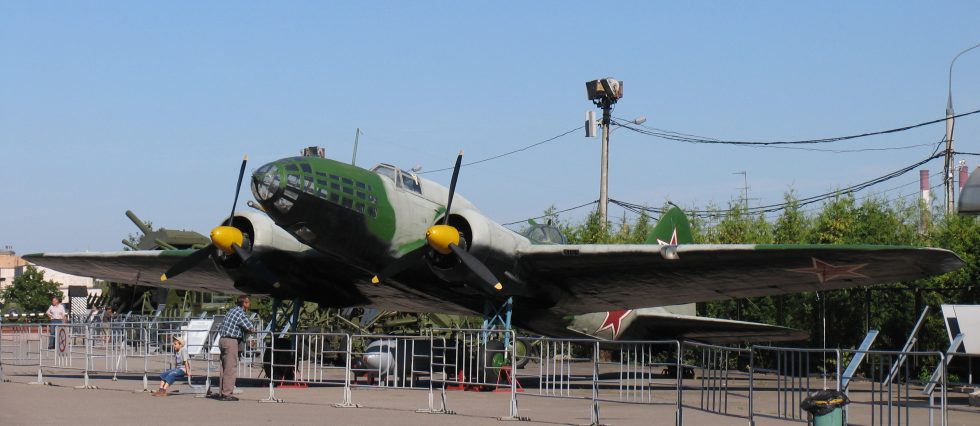
Survivors, precisely. There is one complete DB-3 anywhere: a DB-3M marked "White 12" at the Central Air Force Museum, Monino, found in taiga 120 km from Komsomolsk-on-Amur, recovered in September 1988, rebuilt over more than a year at the Irkutsk aircraft works and handed to the museum on 22 December 1989. Of the Il-4 there is one museum aircraft — construction number 17404, "White 2", at the Central Museum of the Great Patriotic War on Poklonnaya Hill, Moscow, recovered from a Far Eastern crash site in the late 1990s after being shot down by Japanese fighters in 1945, and rebuilt as a combination of original components and new-build structure rather than as an intact airframe. A third machine stands as a monument on Courage Square in Severomorsk, unveiled on 26 July 1981 and assembled by search teams from a wreck found in the hills after nearly a year of work. Sources that call either the Moscow or the Severomorsk aircraft "the sole surviving Il-4" are counting different things. Nothing flies, nothing is airworthy, and every one of these is a recovered wreck rather than a preserved aeroplane — which, for a type built at the rate of thousands and expended at the rate of eight a day, is the more truthful memorial anyway.
From record-breaker to Berlin and beyond
The DB-3 flies
Ilyushin’s first long-range bomber, the DB-3, takes to the air — a modern, long-legged design for its day.
Record flights
Vladimir Kokkinaki sets long-distance records in specially prepared DB-3s, including the celebrated “Moskva” flights.
The DB-3F
A simplified, cleaner-nosed and re-engined version — the future Il-4 — enters production.
War in the east
Germany invades. DB-3F bombers equip Soviet Long-Range Aviation and naval torpedo regiments.
Berlin
Baltic Fleet DB-3s under Preobrazhensky bomb Berlin from Saaremaa — the first Soviet raid on the German capital.
Renamed Il-4
The DB-3F is redesignated Il-4 as the Soviet Union adopts designer-based aircraft names.
Mainstay of the long-range war
The Il-4 flies night bombing across the front and torpedo and mine-laying missions at sea until victory in 1945.
Retirement
Worn out and outdated in the jet age, the last Il-4s are withdrawn from Soviet service.
From the long-range war: twelve Il-4 stories
The long-range bomber
The DB-3 gave Ilyushin’s bureau its first modern long-range bomber.
Read the full story
Kokkinaki and the “Moskva”
Test pilot Vladimir Kokkinaki set long-distance records in specially prepared DB-3s.
Read the full story
Why the DB-3 became the Il-4
A cleaner nose, simpler structure and new engines turned the DB-3 into the DB-3F, then the Il-4.
Read the full story
The M-88 radials
Two Tumansky M-88B radials gave range, if not speed.
Read the full story
The first Soviet raid, August 1941
Baltic Fleet crews bombed Berlin from a small Estonian island at the edge of the aircraft’s range.
Read the full story
Made Heroes of the Soviet Union
The Berlin raid crews were honoured for a mission flown against the odds.
Read the full story
The torpedo-bomber
As the Il-4T, the aircraft became the Soviet navy’s main torpedo-bomber.
Read the full story
A creature of the dark
Vulnerable by day, the Il-4 did much of its bombing at night.
Read the full story
A demanding machine
Heavy controls and poor engine-out behaviour made the Il-4 hard to master.
Read the full story
Bringing crews home
For all its faults, the Il-4 could take punishment and keep flying.
Read the full story
Built in thousands
Around 5,256 Il-4s were produced, and over 6,700 counting all DB-3 variants.
Read the full story
The workhorse that reached Berlin
Unloved but essential, the Il-4 carried the Soviet war deep into enemy skies.
Read the full story
The Ilyushin Il-4 in pictures
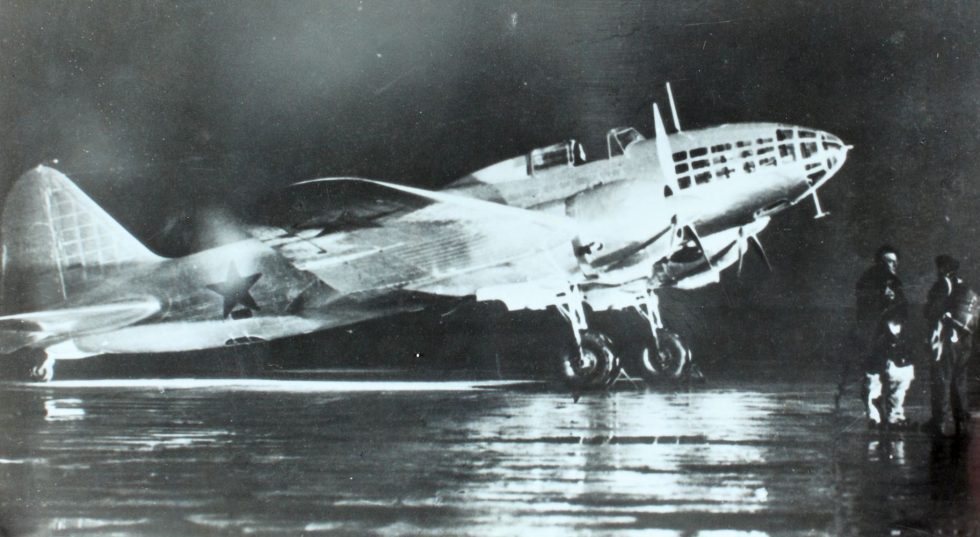
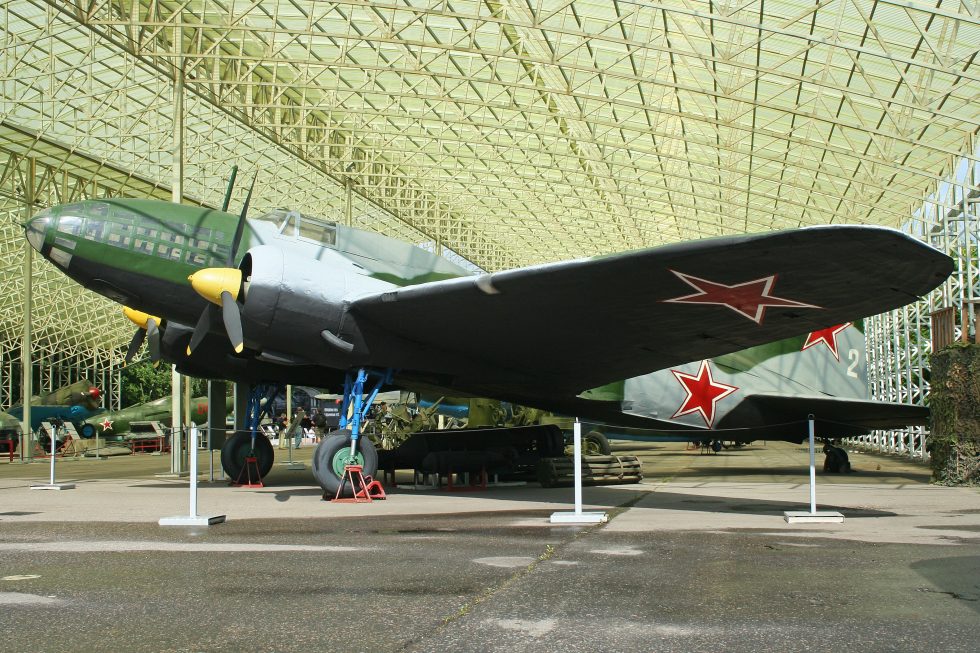
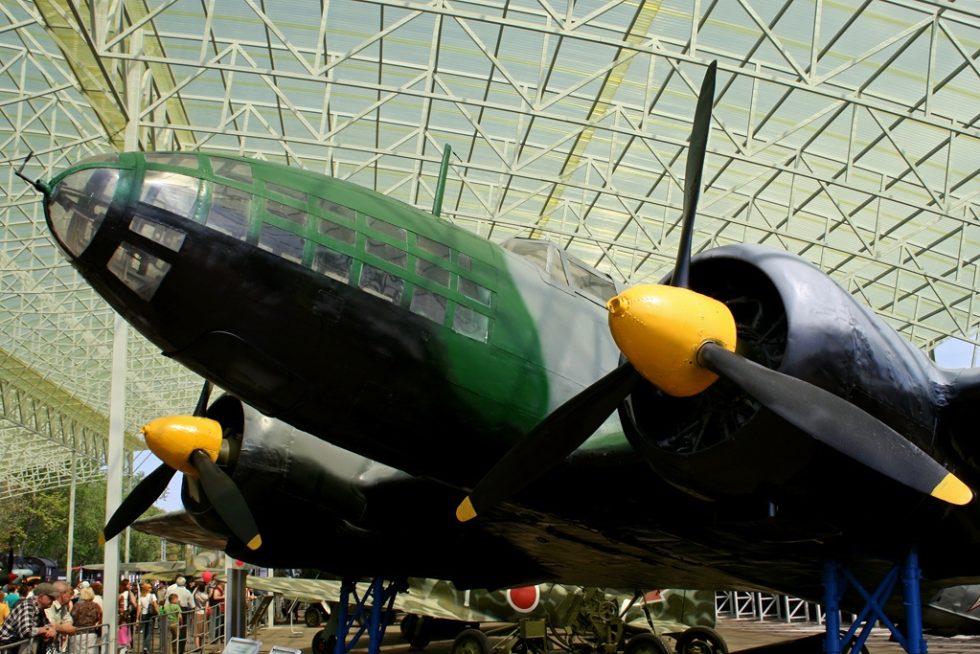
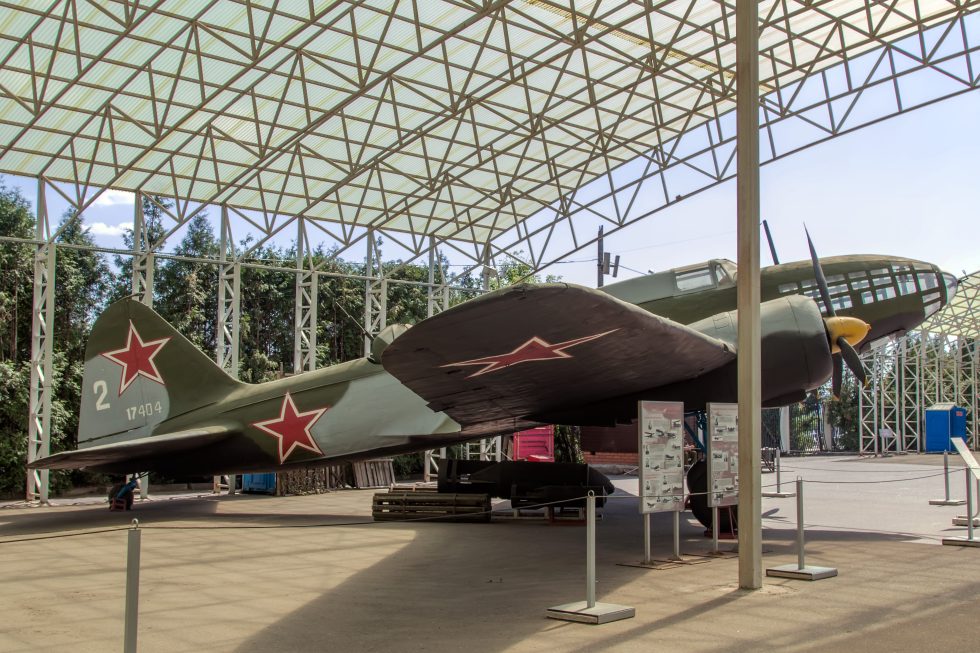
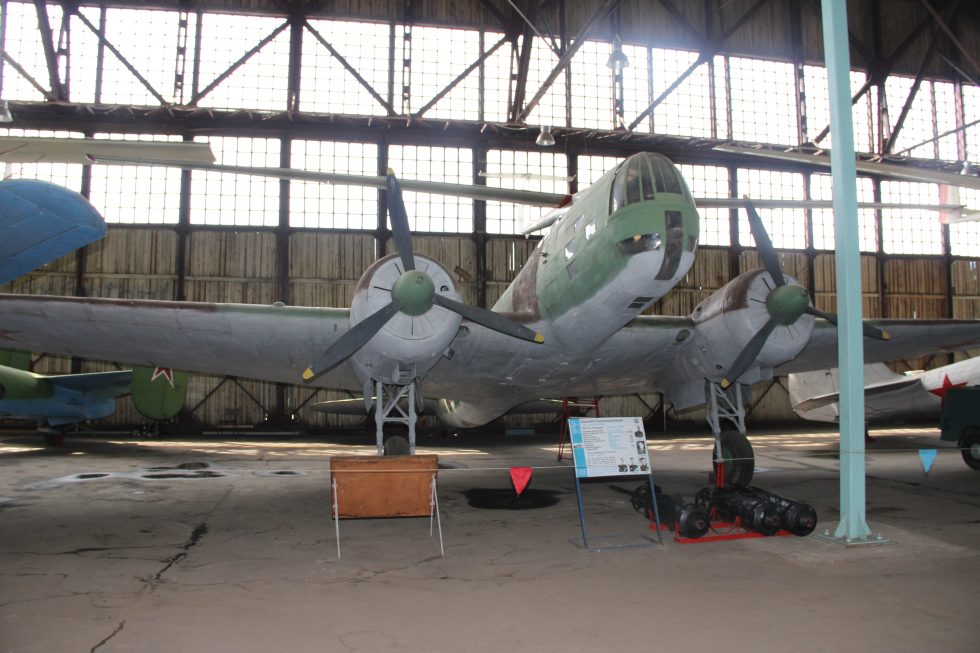
The Ilyushin Il-4 and its naval war
Naval History with Dr Alex: Ilyushin DB-3 & Il-4 — Great Patriotic War Soviet Torpedo Bombers (Key Aircraft Series). A historian’s deep-dive into the DB-3/Il-4 family and, above all, its work as the Soviet navy’s torpedo-bomber.
Where the Il-4 flew — and fought
Ilyushin Il-4: the combat record
The Il-4’s war was not written in dogfights but in distance. It was the aircraft that let the Soviet Union hit back beyond the front line — over Berlin in 1941, across the Eastern Front by night, and against enemy shipping as a naval torpedo-bomber — from the first summer of the war to the last.
Compare the combat record of every military aircraft. Figures as of August 2026.
Everything people ask about the Ilyushin Il-4
Can I fly in an Ilyushin Il-4?
Why is the Ilyushin Il-4 famous?
What is the difference between the DB-3 and the Il-4?
How many Il-4s were built?
What engines did the Il-4 use?
Was the Il-4 a torpedo-bomber?
Was the Il-4 difficult to fly?
Are any Il-4s left?
You can’t fly the Ilyushin Il-4.
These, you can.
Some legends only live in museums — others are fuelled and waiting. MiGFlug has put civilians in real military jet cockpits since 2004.
 Fly the L-39 AlbatrosThe world’s most-flown jet trainer — aerobatics included
 Fly the F-104 Starfighter“The missile with a man in it”
 Fly the MiG-21The Cold War’s most-produced jet
 Fly the T-33 Shooting StarAmerica’s first jet trainer
 Fly the DH VampireA piece of early jet history
 Fly the S.211Agile Italian jet trainer
 Fly the MB-326The classic Aermacchi jet
 Fly the MiG-15The Soviet legend of the Korean War
Continue the tour
Every fact, checked
- Military Factory — Ilyushin Il-4 (DB-3F)Specifications, engines, armament and production figures used here.
- flugzeuginfo.net — Ilyushin Il-4 / DB-3 technical dataCross-check for dimensions, weights and performance.
- Military History Now — Target Berlin: the Forgotten Soviet Bomber RaidsThe August–September 1941 Berlin raids flown from Saaremaa.
- Warfare History Network — Soviet Navy Over BerlinThe Baltic Fleet naval-aviation raids and Preobrazhensky’s crews.
- The Aviationist — the 1941 Soviet Berlin raidContext and detail on the first Soviet strikes on the German capital.
- Weapons and Warfare — Ilyushin’s DB-3/Il-4 medium bomberDevelopment history from the DB-3 to the Il-4 and its service.
- Yefim Gordon & Dmitriy Komissarov — OKB Ilyushin: A History of the Design Bureau and its AircraftDetailed monograph on the DB-3/Il-4 design and variants.
- Imperial War MuseumsReference for the Eastern Front and the strategic-bombing context of 1941.