
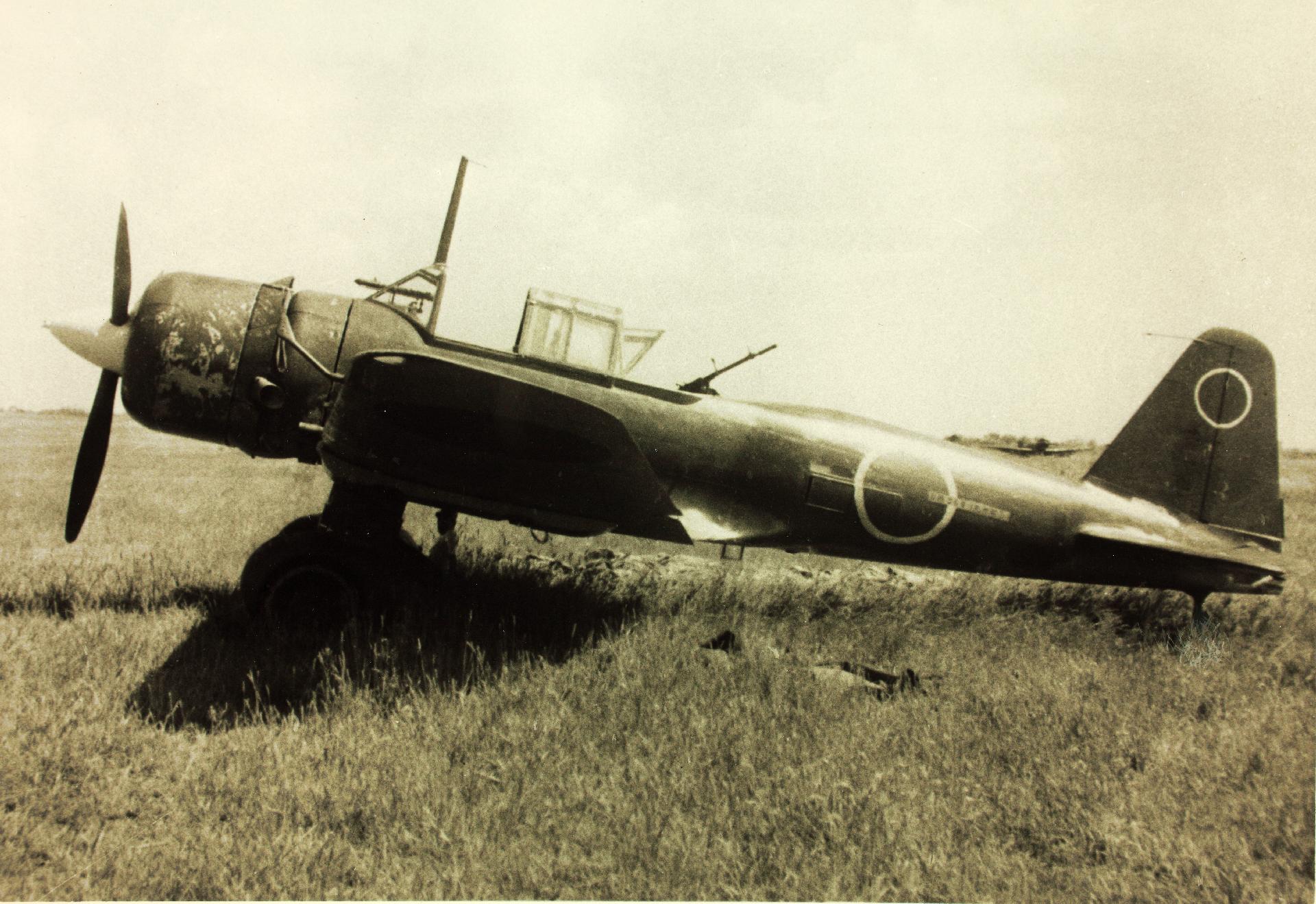
Mitsubishi Ki-51
“Sonia”
Slow, sturdy and everywhere the Japanese Army fought — a light ground-attack and army-cooperation aircraft built to work from rough forward strips, armoured to survive the front line, and flown to the very last day of the war.
The Mitsubishi Ki-51: the Army’s rugged low-level workhorse
By the late 1930s the Imperial Japanese Army had learned a hard lesson over China: a battlefield support aircraft did not need to be fast or glamorous, it needed to be tough, simple and able to operate from a dirt strip behind the front line. In December 1937 the Army issued a specification for exactly that — a smaller, sturdier successor to the Mitsubishi Ki-30 “Ann” light bomber. Mitsubishi’s answer, first flown in 1939, became the Ki-51.
It was never meant to dazzle. Powered by a single Mitsubishi Ha-26 radial of around 940 hp and cruising at little more than 400 km/h, the Ki-51 was slow by any 1940s standard. But it carried what mattered: about 6 mm of armour around the cockpit and engine — unusual protection for a Japanese design of the period — a robust fixed, spatted undercarriage that shrugged off rough ground, and a low wing that let it be built simple and strong. Crews liked it; ground staff could keep it flying with modest facilities. The Army adopted it as the Type 99 Assault Plane (and, in a near-identical reconnaissance form, the Type 99 Army Reconnaissance Plane).
From 1940 the Sonia — the Allied reporting name it later earned — fought in essentially every theatre the Japanese Army entered: the long war in China, the jungles of Burma and New Guinea, the sprawling Netherlands East Indies, and the bitter defence of the Philippines. It strafed, dive-attacked and spotted for the guns, and it proved more consistently useful than several far more sophisticated Japanese types. As the war turned, the same qualities that made it a good attack aircraft — simplicity, availability and a bomb under the belly — saw it pressed into kamikaze service in the final months.
Production ran to roughly 2,385 aircraft (sources differ, with 2,372 also widely cited) built by Mitsubishi and the Tachikawa arsenal until July 1945. The Sonia’s story did not quite end with Japan’s surrender: captured examples were flown by Indonesian revolutionaries against returning Dutch forces in the independence war that followed, and a survivor still stands in an Indonesian museum today.
01The Mitsubishi Ki-51 in the ground-attack role: why the Army wanted something small
The Ki-51 grew directly out of combat experience in China. The earlier Ki-30 “Ann” was a capable light bomber, but the Army wanted a smaller, more agile aircraft that could work close to the troops — diving on gun positions, strafing columns, and flying from the improvised strips that followed an advancing army. The December 1937 specification asked for good low-speed handling, short-field performance and durability rather than raw speed.
Mitsubishi met it by keeping things deliberately conventional: a low-wing monoplane with a fixed, trousered undercarriage — heavier than a retractable gear, but far simpler to maintain and much harder to damage on a rough field. The result looked dated even in 1940, but it did the unglamorous job of army cooperation better than more advanced designs, and it stayed in production until the very end of the war.
What makes it special
Built to take a beating
Where most Japanese aircraft traded protection for range and agility, the Ki-51 carried roughly 6 mm of armour plate around the cockpit and engine. Combined with a strong, simple structure, it gave the Sonia a reputation for bringing its two-man crew home from low-level attacks that would have destroyed a lighter machine.
A single rugged radial — and fixed gear
Power came from one Mitsubishi Ha-26 14-cylinder air-cooled radial of about 940 hp. It was never fast — roughly 424 km/h flat out — but the fixed, spatted undercarriage let it operate from rough forward strips that would have wrecked a retractable gear, and it was famously easy to service.
Light punch, close support
Armament was modest: two fixed forward-firing wing guns (7.7 mm early, 12.7 mm on later aircraft), a flexible rear gun for the observer, and up to about 200 kg of bombs. It was enough for the job the Ki-51 was built for — hitting troops, vehicles and positions from low level, again and again.
02The Mitsubishi Ki-51’s armour and undercarriage: built to survive the front line
Two features set the Ki-51 apart from the fragile reputation of wartime Japanese aircraft. First, the armour: around 6 mm of plate shielded the cockpit and the engine, a deliberate choice for an aircraft expected to loiter low over hostile ground. Second, the fixed, trousered undercarriage: aerodynamically crude, but immensely practical. It let the Sonia fly from the kind of hastily scraped forward airfields that an army-cooperation aircraft actually had to use, and it removed a whole system that could jam, collapse or need workshop attention. The trade was speed — and the Ki-51 was slow — but for its role, durability beat velocity every time.
03The Mitsubishi Ki-51’s kamikaze role: the Sonia’s final mission
By late 1944 Japan was expending aircraft as guided weapons, and the Ki-51 — cheap, available in numbers and able to carry a bomb — was among the types drawn into kamikaze operations. Sonias flew suicide sorties during the Philippines fighting; a Ki-51 is among the aircraft credited with striking the US Navy light cruiser USS Columbia in Lingayen Gulf on 6 January 1945. Exact tallies of Ki-51 kamikaze sorties and hits are not reliably documented, and figures should be treated with caution — but the type’s presence in the final, desperate campaigns is well attested. It was a grim second career for an aircraft designed simply to support soldiers on the ground.
Full specifications
Baseline note: the figures below describe the standard production Ki-51 Army Type 99 Assault Plane of about 1942–43 — Mitsubishi Ha-26-II engine, crew armour and rubber-covered fuel tanks fitted, two 7.7 mm wing guns. Deltas for the unarmoured early machines, for the Army Type 99 Reconnaissance Plane, for the 12.7 mm gun standard adopted in November 1943 and for the Manshu Ki-71 development are given in grey. Japanese Army figures of the period were quoted at normal loaded weight in standard atmosphere; Japanese and English-language references disagree by small margins on wing area, climb time and the engine’s altitude rating, and each disagreement is flagged where it occurs.
Dimensions & weights
- Crew
- 2 — pilot and observer/gunner in tandem under one continuous glazed canopy, seated close together so they could shout at each other without an intercom
- Length
- 9.21 m (30 ft 3 in)
- Wingspan
- 12.10 m (39 ft 8 in)
- Height
- 2.73 m (8 ft 11 in)
- Wing area
- 24.02 m² (258.6 sq ft); Japanese sources generally print 24.20 m² (260.5 sq ft) and English tables often round to 24 m². The Ki-30 it was cut down from carried 30.58 m²
- Wing
- Low-set all-metal cantilever wing, stressed skin, split flaps. The Ki-30’s mid-set wing was dropped to the bottom of the fuselage for one blunt reason: it shortened the fixed undercarriage legs
- Fuselage
- All-metal semi-monocoque, flush-riveted over most of its area; control surfaces fabric-covered and replaceable in the field
- Undercarriage
- Fixed cantilever main legs in streamlined spats, castoring tailwheel. The spats were routinely removed on muddy Chinese and Burmese strips, at a cost of a few km/h nobody cared about
- Protection
- 6 mm armour plate beneath the engine, under and behind the cockpit floor, over the decking and under the wing centre section; rubber-covered self-sealing fuel tanks. Introduced on the eleventh service-trial machine and standard on production aircraft — sources differ on the exact production cut-in, most placing the fully protected standard in general service during 1940–41
- Empty weight
- 1,873 kg (4,129 lb)
- Loaded weight
- 2,798 kg (6,169 lb)
- Maximum take-off weight
- 2,920 kg (6,437 lb)
- Wing loading
- 116.5 kg/m² (23.9 lb/sq ft) at loaded weight — low enough to explain both the short field run and the sluggish top speed
- Power loading
- 2.98 kg/hp (6.56 lb/hp); 4.00 kg/kW
Performance
- Maximum speed
- 424 km/h (263 mph; 229 kn) at 3,000 m (9,845 ft)
- Cruising speed
- 320 km/h (199 mph; 173 kn) at 2,000 m (6,560 ft)
- Climb to 5,000 m
- 9 min 55 sec (to 16,405 ft); Japanese sources give 8 min 47 sec for the same climb, a gap wide enough that one of the two figures is for a lighter loading than the other
- Service ceiling
- 8,270 m (27,130 ft) — academic on an aeroplane whose whole purpose was to work below 1,000 m
- Normal range
- 1,060 km (660 miles; 572 nmi) on internal fuel
- Combat radius
- ~350–400 km (~220–250 miles) with a 200 kg bomb load and a reserve; derived from the range figure rather than quoted in Japanese Army data, and short by any standard of 1942
- Take-off run
- 165 m (541 ft) — the single most useful number on this page
- Landing run
- 276 m (906 ft)
- Attack profile
- Shallow glide and low-level attack only. No dive brakes and no bomb-displacement crutch were fitted, so the type was never a dive bomber in the Ju 87 or D3A sense, whatever Allied intelligence summaries called it
- Low-altitude handling
- Genuinely good. Light controls, a docile stall and a tight turn at low speed; Japanese Army pilots recorded fighter claims flown on nothing but manoeuvre, and the type was used as an advanced trainer partly because it was pleasant to fly
- Survivability against fighters
- Poor and known to be poor. At 424 km/h with fixed gear it was slower than a 1937 fighter; against a P-40, a Spitfire or a Hellcat the armour bought seconds, not survival, and Ki-51 units survived by flying low, flying early and flying where no fighters were
Propulsion & systems
- Engine
- 1 × Mitsubishi Ha-26-II (Army designation; Navy Zuisei 15), 14-cylinder two-row air-cooled radial
- Rated power
- 940 hp (700 kW) for take-off at 2,650 rpm. Published altitude ratings vary between references, most giving about 950 hp (708 kW) at rated altitude; one widely reproduced English-language specification table transposes the two and prints 710 kW / 950 hp as take-off power
- Displacement
- 28.0 l (1,710 cu in); bore 140 mm × stroke 130 mm (5.5 in × 5.1 in), compression ratio 6.5:1
- Supercharger
- Single-stage single-speed centrifugal, gear-driven — no two-speed drive, which is why the aeroplane had nothing above medium altitude
- Engine dry weight
- 540 kg (1,190 lb)
- Fuel
- 608 l (~134 imp gal; ~161 US gal) in rubber-covered protected wing tanks; 87-octane petrol, which the Ha-26 tolerated better than the high-output engines Japan could not feed
- Propeller
- Sumitomo three-blade metal constant-speed unit, built under Hamilton Standard licence
- Guns and synchronisation
- Both fixed guns sat in the wings outside the propeller disc, so no synchronisation gear was fitted, nothing had to be timed at overhaul, and the guns fired at full cyclic rate. A small point that mattered enormously to units servicing aircraft in the open with no hangar
- Reconnaissance fit
- Army Type 99 Reconnaissance Plane aircraft carried a camera shooting through fuselage side windows, an enlarged canopy for observation, and had the rear dual controls and some armour deleted; they kept the guns and bomb racks and flew attack sorties when asked
- Radio and field equipment
- HF radio with mast and wire aerial, message pick-up hook and message tubes for army co-operation work; inertia starter that could be hand-cranked, so an aircraft could be started at a strip with no ground power and no starter trolley
- Maintainability
- The type’s real virtue. No retractable gear, no hydraulics beyond the flaps and propeller, no turbocharger, no synchronisation gear, no bomb bay doors — a design that a sentai with almost nothing could keep flying, and which is why Ki-51s were still operating from jungle strips in 1945
04The Mitsubishi Ki-51’s operating costs: why no reliable price exists
The Ki-51 was a wartime state product of the Imperial Japanese Army, built by Mitsubishi and the Tachikawa arsenal and never traded on any open market. As a result no credible unit flyaway price or cost-per-flight-hour figure exists in the public record, and any precise dollar or yen number attached to the type today is effectively invented. What can be said is that the Sonia was designed to be cheap and simple — a conventional airframe, a single well-understood radial, fixed gear and easy maintenance — precisely so that it could be produced in quantity and kept flying from primitive fields. Its value was measured in availability and durability, not in an accountant’s ledger.
Armament & payload
The Ki-51 attacked with two wing guns and 200 kg of bombs, the armament of a colonial air force fighting a colonial war
The Ki-51 was armed for the war the Japanese Army expected to fight in 1938: two rifle-calibre machine guns in the wings, one flexible gun for the observer, and a couple of hundred kilogrammes of bombs on external racks for troops, transport and river craft. Against Chinese ground forces this was adequate and occasionally decisive, because the targets were unarmoured and the aeroplane could be over them within minutes of a request. Against anything the Allies fielded from 1942 onwards it was thin, and the Army knew it: from November 1943 the two 7.7 mm wing guns were replaced by 12.7 mm Ho-103, which roughly tripled the weight of fire without adding a single knot.
What the Ki-51 did not have is as instructive as what it did. There was no internal bomb bay — the Ki-30’s bay was deliberately deleted to save weight and structure, and everything hung outside. There were no dive brakes, so attacks were shallow glides, not dives. There was no forward-firing cannon, no armour-piercing capability worth the name, and no way to hurt a warship larger than a landing craft with a 50 kg bomb. The one exception is famous out of all proportion: on 6 August 1945 a Ki-51 of the 73rd Independent Chutai attacked the submarine USS Bullhead north of Bali with small bombs and sank her with all hands, the last United States warship lost to enemy action in the Second World War. Ammunition capacities, the exact rear-gun type on individual production batches and the composition of typical bomb loads all vary between Japanese and Western references, and unit attributions for late-war sorties are frequently reconstructed rather than documented.
Gun
- 2 × 7.7 mm Type 89 fixed machine guns, one in each wing outside the propeller disc, as built and through most of production
- From November 1943 the wing guns were changed to 2 × 12.7 mm Ho-103 (Army Type 1), a Browning M2 derivative firing the short 12.7 × 81SR Breda-SAFAT round at about 900 rounds per minute unsynchronised
- 1 × flexible rear gun on a ring mount in the observer’s cockpit: the 7.7 mm Type 89 flexible on most aircraft, with the 7.92 mm Te-4 (Army Type 98, an MG 15 derivative) quoted for later machines. Sources contradict each other on which type was standard when.
- Because the fixed guns were in the wings, no synchronisation gear was needed — no timing at overhaul, no rate penalty, one less system to fail on a strip with no workshop
- The Ho-103’s short cartridge gave it less range and velocity than the American gun it copied, so Japanese units loaded high-explosive incendiary and fired close
Air-to-air
- No dedicated air-to-air weapon existed on the type; the wing guns and the observer’s single flexible gun were the whole of it
- Japanese Army records do contain Ki-51 claims against Allied aircraft, made at low level by pilots who out-turned an attacker and got a snap shot — a real if statistically trivial phenomenon
- The honest verdict is the other way round. A Ki-51 caught by any modern fighter was a target, and formations were repeatedly slaughtered over New Guinea and the Philippines
- The rear gunner was the only active defence and a single rifle-calibre gun on a hand-swung mount was not a defence at all against a diving fighter
- Tactics compensated where equipment could not: dawn and dusk sorties, terrain masking, and operating from strips too rough for the enemy to suspect were in use
Air-to-surface guided
- None. No guided air-to-surface weapon was ever fitted to, or trialled on, the Ki-51
- The card is kept because the absence is the whole point of the aeroplane: everything it did, it did by flying low enough that guidance was the pilot’s eyes
- The Japanese Army’s guided-weapon programmes of 1944–45 went to newer airframes, and none of them reached operational units in useful numbers
- From late 1944 the type acquired a guided weapon of the crudest kind: the aeroplane itself, flown into the target by a pilot who did not come back
Bombs
- Normal load 200 kg (441 lb) on underwing racks — commonly 4 × 50 kg (110 lb), or clusters of 15 kg and 25 kg anti-personnel bombs for troops in the open
- 60 kg (132 lb) bombs were the weapons used against USS Bullhead on 6 August 1945
- No internal bay. The Ki-30’s bomb bay was deliberately deleted, which cost carriage but removed doors, mechanism, structure and weight
- Special-attack aircraft from late 1944 carried a single 250 kg (551 lb) bomb on a fixed underfuselage attachment — a load and a centre-of-gravity the airframe had never been cleared for in normal service, which mattered less on a one-way flight
- Attacks were flown as shallow glides from low level. With no dive brakes and no displacement crutch, accuracy depended on getting close, which the Ki-51 was better at surviving than most
Rockets
- None. No Ki-51 carried air-to-ground rocket projectiles in any air force, in any theatre, at any point in its career
- Japanese Army air-launched rockets appeared late and in small numbers, and went to interceptors rather than to a 1939 assault aeroplane
- This is one of the clearest gaps between the Ki-51 and its Allied and Soviet contemporaries: the Il-2, the Hurricane IID and the Typhoon all acquired a heavy anti-armour punch the Ki-51 never had
- Against tanks the Ki-51 had 12.7 mm guns and 50 kg bombs, which is to say nothing useful, and Japanese close support against armour was correspondingly ineffective
Pods & other stores
- No drop tanks are attested in Japanese Army loading data for the type, and the short radius that followed was a permanent operational constraint
- Reconnaissance aircraft carried a fuselage camera shooting through side windows; there was no podded sensor of any kind
- Army co-operation equipment: message pick-up hook, message tubes, and small supply containers for isolated detachments — the unglamorous work the type did more of than anything else
- No gun pods, no radar, no radio-countermeasures fit, no smoke-laying gear in general service
- Late-war special-attack conversions had the racks replaced by a fixed single-bomb attachment and, on some machines, radio and armour stripped out to claw back weight
Three typical loadouts
- Close support, central China 1941
- 4 × 50 kg bombs on underwing racks, full ammunition for the two 7.7 mm wing guns and the observer’s flexible gun, no external tanks. Flown from a strip 20–40 km behind the line, called in by an army liaison officer, with two or three sorties possible in a day.
- Army co-operation reconnaissance, Burma 1943
- Camera fit, clusters of small anti-personnel bombs retained on the racks, guns loaded. The sortie was photography and visual reconnaissance of a road or river crossing, with the bombs there to punish anything worth punishing on the way home.
- Special attack, Okinawa 1945
- One 250 kg bomb on a fixed underfuselage attachment, fuel for a one-way flight, guns often loaded but irrelevant, radio and some armour deleted. Launched at dawn or dusk in small groups against picket destroyers and transports, on the reasoning that a slow biplane-era aeroplane at wave height was harder for radar and combat air patrol to find than a fast one at altitude.
Sourcing caveat: Japanese Army armament data for the Ki-51 survive unevenly. Ammunition capacities, the rear-gun type by production block and the standard bomb combinations are given differently by Japanese technical summaries, by Francillon’s Japanese Aircraft of the Pacific War and by wartime Allied intelligence recognition material, which was frequently wrong about the type in any case — including calling it a dive bomber. Where this page states a figure without qualification, it is the one that appears in the majority of independent sources.
Variants
The Ki-51 was a Ki-30 cut down until it could live at the front, and it barely changed for six years afterwards
The Ki-51 began in December 1937 as a reconnaissance requirement and became something else in July 1938, when the Koku Hombu decided that the army reconnaissance aircraft and the assault aircraft should be one type. Mitsubishi did not start from a blank sheet. It took the Ki-30 light bomber it was already building, dropped the wing from mid to low position to shorten the fixed undercarriage legs, cut the wing area from 30.58 to about 24 m², deleted the internal bomb bay, moved the two crew together under one canopy and substituted a Mitsubishi Ha-26-II for the Nakajima Ha-5. The result was smaller, lighter, shorter-ranged and no faster — and far better suited to being flown hard from a rough strip by a unit with no hangar.
Two prototypes were completed in mid-1939, followed by eleven service-trial machines. The eleventh of those carried the change that defined the type in service: 6 mm armour plate around the engine, cockpit and wing centre section, and rubber-covered self-sealing fuel tanks. This was a genuinely unusual decision for a Japanese Army aeroplane, made years before protection became standard on Japanese fighters, and it was made for the plainest of reasons — an aircraft that attacks from 200 m gets shot at from the ground on every sortie. The type was standardised in May 1940 as the Army Type 99 Assault Plane.
After that, very little happened. There was no re-engining, no retractable undercarriage, no structural redesign; the only significant change in five years of production was the switch to 12.7 mm wing guns in November 1943. Manshu’s attempt at a proper successor got nowhere, and the Ki-51 was still coming off the line at Tachikawa when the war ended.
- Ki-51 prototypes (1939 / 2 built)
- First aircraft completed and flown mid-1939; a cut-down, low-winged, bomb-bay-less Ki-30 with the Ha-26-II radial.
- Ki-51 service-trial aircraft (1939–40 / 11 built)
- Pre-production batch for army trials. The eleventh introduced 6 mm crew and engine armour and rubber-covered protected tanks, which became the production standard.
- Ki-51 Army Type 99 Assault Plane (standardised May 1940; the bulk of production)
- The definitive close-support machine: two fixed wing guns, one flexible rear gun, 200 kg of bombs on external racks, armour and protected tanks.
- Ki-51 Army Type 99 Reconnaissance Plane (Ki-51a in Western usage / from 1941)
- Camera through fuselage side windows, enlarged canopy for observation, rear dual controls and some armour deleted; guns and racks retained, so it attacked as well as looked.
- Ki-51b (Western designation, not Japanese practice)
- Label applied in English-language references to the fully armoured assault standard with underwing bomb racks. Japanese documentation does not use an a/b suffix system for this type, and the split should be treated as a Western convenience.
- Ki-51 with Ho-103 armament (from November 1943)
- Wing guns changed from 7.7 mm Type 89 to 12.7 mm Ho-103 after repeated combat reports that the rifle-calibre fit was useless; the only substantive armament change of the programme.
- Ki-51 special-attack conversion (late 1944–1945)
- Fixed underfuselage attachment for a single 250 kg bomb, radio and some armour deleted on some machines. Used by Army tokko units in the Philippines and over Okinawa; a slow aircraft at wave height proved harder to intercept than doctrine predicted.
- Manshu Ki-71 (1943 / 3 prototypes)
- Manshu Hikoki Seizo’s reworking with retractable undercarriage, a more powerful Mitsubishi radial and heavier armament, intended as the tactical-reconnaissance successor. Faster, but not enough faster to justify disrupting Ki-51 production; abandoned. Detailed Ki-71 figures rest on limited surviving documentation and should be treated cautiously.
- Production split (1939–1945 / 2,385 total)
- Mitsubishi at Nagoya built 1,472 to July 1945; the 1st Army Air Arsenal at Tachikawa built 913 from 1941. Some references print 1,462 for Mitsubishi, which does not add up to the accepted 2,385 total; 1,472 + 913 does.
- Postwar operators (1945–1953)
- Indonesian republican forces flew captured examples as the "Guntei"; Chinese Communist forces operated roughly 100, the last four retired in 1953; the French flew at least two in Indochina. No new-build aircraft were produced by any of them.
The Indonesian chapter is the one that outlived everything else. When Japan surrendered, republican fighters seized aircraft at Maguwo, Bugis and other former Japanese fields, and a handful were made to fly again by mechanics working from captured manuals with no spares chain at all. At first light on 29 July 1947, during the first Dutch "police action", three of them left Maguwo to attack Dutch positions: a Ki-51 "Guntei" flown by Air Cadet Mulyono with Dulrachman as bomb-dropper against the Dutch barracks at Semarang, and two Yokosuka K5Y Cureng trainers against Salatiga and Ambarawa, each aircraft carrying two 50 kg bombs. A fourth machine, a Nakajima Ki-43, never started. All three returned by about six in the morning. Militarily the raid achieved almost nothing; politically it proved that the republic’s air arm existed after the Dutch had announced its destruction, and it is commemorated in Indonesia to this day. The brief for this page described the raid as carried out by Ki-51s in the plural; the surviving accounts are consistent that one Ki-51 flew, alongside two Cureng trainers.
That same evening the Dutch shot down the Dakota VT-CLA near Maguwo, killing Agustinus Adisutjipto, Abdulrachman Saleh and Adisumarmo — three of the men who had built the air arm the morning’s raid had just demonstrated. The date is marked as Hari Bakti TNI Angkatan Udara. It is an odd fate for an obsolete Japanese army co-operation aeroplane to end up at the founding of another country’s air force, and it is the reason the only complete Ki-51 left in the world is in Java rather than in Japan.
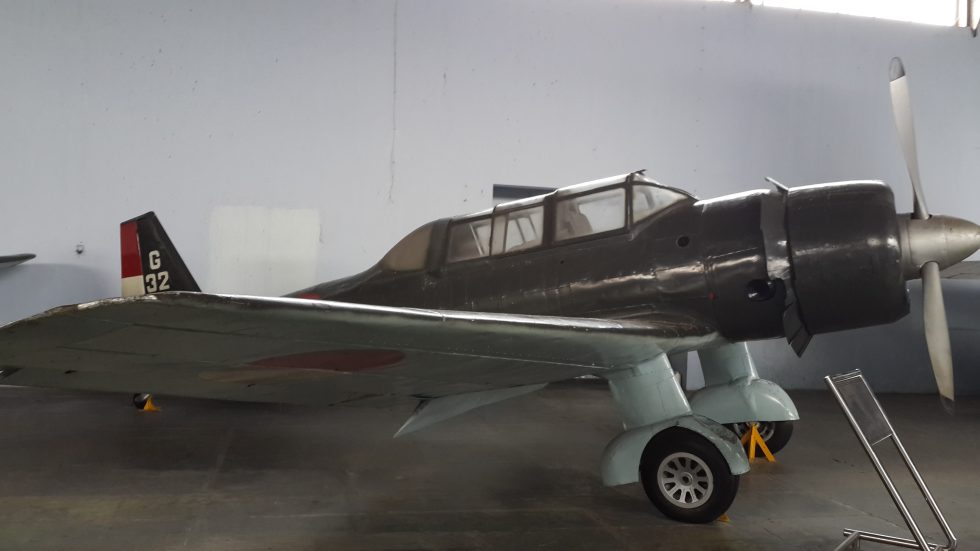
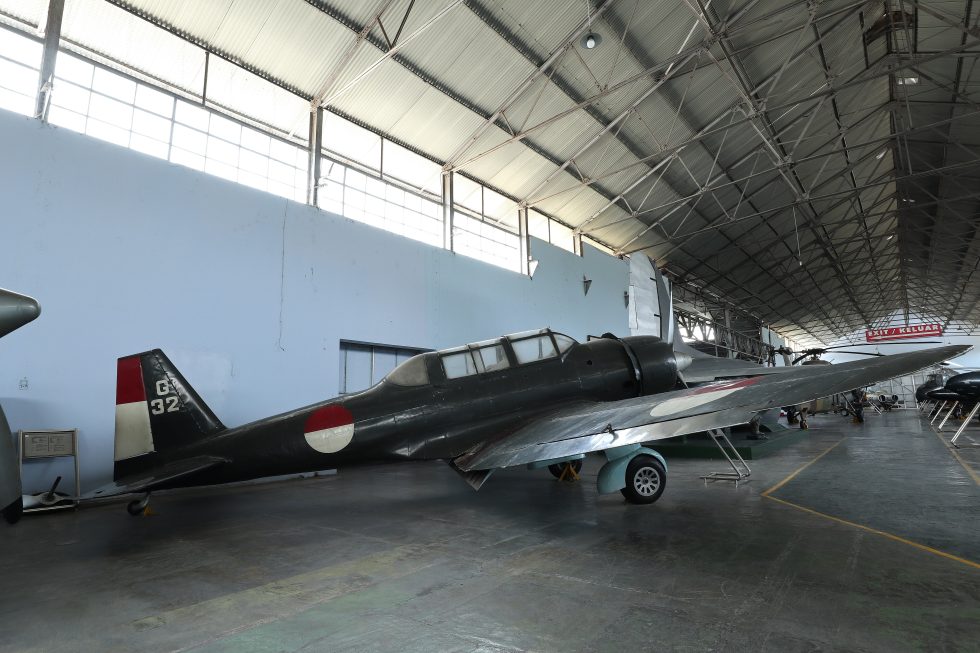
Survivors, precisely: exactly one complete original Ki-51 exists. It is displayed at the Museum Pusat TNI AU Dirgantara Mandala in Yogyakarta, Indonesia, in Indonesian Air Force markings; the airframe was found abandoned at Babo airfield in what is now West Papua and recovered in 1987 for restoration. There is no airworthy example anywhere, no reproduction has been built, and no complete Ki-51 is held on public display by any Japanese, European or North American museum — a striking absence for a type built in greater numbers than the Ki-44 or the Ki-100. What survives beyond Yogyakarta is wreckage: substantial airframes recorded at Alexishafen and Cape Gloucester in Papua New Guinea, a hulk in a Pahang swamp in Malaysia, a tail section from Labuan, further remains in Borneo and at Hollandia, and two centre sections in private hands. Pacific Wrecks lists around fifteen individually numbered Ki-51 airframes, none of them restorable to display standard without extensive fabrication. Chinese and French postwar aircraft were all scrapped.
From China skies to the Indonesian revolution
The requirement
In December the Japanese Army issues a specification for a small, sturdy ground-attack aircraft to succeed the Ki-30 “Ann.”
First flight
Mitsubishi flies the Ki-51 prototypes in mid-1939 — conventional, fixed-gear and deliberately simple.
Enters service
Adopted as the Type 99 Assault Plane and Army Reconnaissance Plane; combat debut over China.
Across the Pacific
The Sonia spreads with the Army into Burma, the Netherlands East Indies and New Guinea.
Defending the Philippines
Ki-51s fly intensive attack and reconnaissance sorties as Allied forces return to the Philippines.
Kamikaze
In January a Ki-51 is among aircraft credited with striking USS Columbia in Lingayen Gulf; suicide sorties continue to the war’s end.
Production ends
Manufacture stops in July after roughly 2,385 aircraft built by Mitsubishi and Tachikawa.
The Indonesian revolution
Captured Ki-51s are flown by Indonesian revolutionaries against Dutch forces; a survivor is preserved at Yogyakarta.
From the front line: twelve Sonia stories
The lesson from China
Combat over China convinced the Army it needed something small, tough and close to the troops.
Read the full story
Why it kept its fixed gear
A retractable undercarriage would have been faster — and far less useful.
Read the full story
Six millimetres of armour
Unusual protection for a Japanese design gave the crew a real chance.
Read the full story
Where “Sonia” came from
The Allied reporting-name system turned an obscure Japanese type into a first name.
Read the full story
The long war it never left
From 1940 the Sonia was a fixture of the China campaigns.
Read the full story
Jungle cooperation
In Burma the Ki-51 supported the Army over some of the war’s hardest terrain.
Read the full story
Attrition in the South-West Pacific
Over New Guinea the Sonia flew into a grinding war of attrition.
Read the full story
The Sonia’s hardest fight
As the Allies returned to the Philippines in 1944, Ki-51s flew intensively — and began to die.
Read the full story
A grim second career
Cheap, available and able to carry a bomb, the Sonia was pressed into suicide attacks.
Read the full story
The Lingayen Gulf strike
On 6 January 1945 a Ki-51 kamikaze hit the cruiser USS Columbia.
Read the full story
Flown against the Dutch
After Japan’s surrender, Indonesian revolutionaries flew captured Sonias for independence.
Read the full story
The Sonia at Yogyakarta
A restored Ki-51 still stands in Indonesia today.
Read the full story
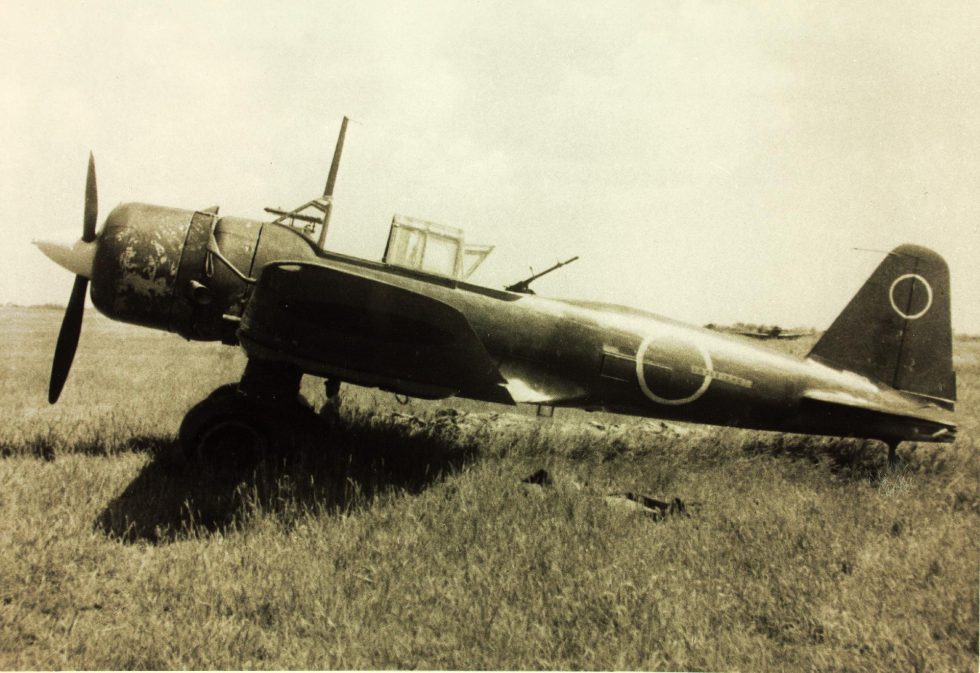
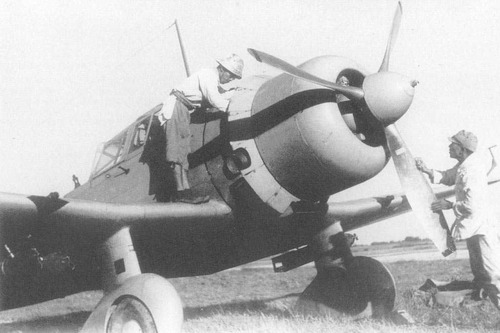
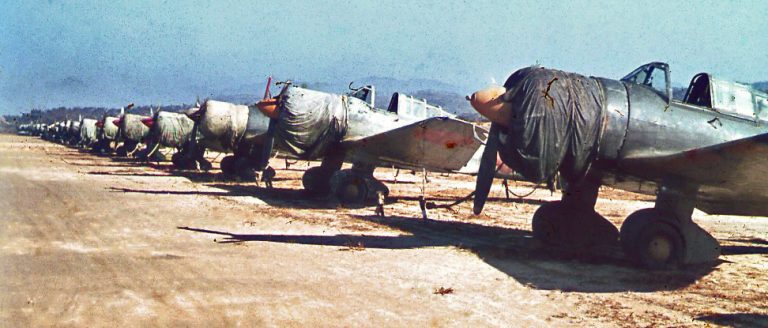
The Sonia in pictures
The Sonia in motion
Rex’s Hangar: Mitsubishi Ki-51. A detailed history of the Sonia from an established aviation-history channel — development, service and the type’s unusual toughness.
Where the Sonia fought
The score that defines it
The Ki-51 was never a fighter and left almost no air-to-air record — its war was fought at low level with bombs and machine guns, in support of soldiers on the ground. Its story is written in ubiquity and endurance: a slow, well-armoured attacker that turned up in every campaign the Japanese Army fought, and that ended the war being flown deliberately into ships.
Compare the combat record of every military aircraft. Figures where they exist are approximate and contested.
Everything people ask about the Mitsubishi Ki-51
Can I fly in a Mitsubishi Ki-51?
How fast was the Ki-51 Sonia?
Why is the Ki-51 called “Sonia”?
Was the Ki-51 any good?
Did the Ki-51 fly kamikaze missions?
How many Ki-51s were built?
Are there any Ki-51 survivors?
You can’t fly the Mitsubishi Ki-51.
These, you can.
Some legends only live in museums — others are fuelled and waiting. MiGFlug has put civilians in real military jet cockpits since 2004.
 Fly the L-39 AlbatrosThe world’s most-flown jet trainer — aerobatics included
 Fly the F-104 Starfighter“The missile with a man in it”
 Fly the MiG-21The Cold War’s most-produced jet
 Fly the T-33 Shooting StarAmerica’s first jet trainer
 Fly the DH VampireA piece of early jet history
 Fly the S.211Agile Italian jet trainer
 Fly the MB-326The classic Aermacchi jet
 Fly the MiG-15The Soviet legend of the Korean War
Continue the tour
Every fact, checked
- René J. Francillon — Japanese Aircraft of the Pacific War (Putnam)The standard English-language reference for Ki-51 development, variants and production totals.
- The Pacific War Online Encyclopedia — Ki-51 “Sonia”Role, armour, rough-field operation, Pacific service and postwar Indonesian use.
- HistoryOfWar.org — Mitsubishi Ki-51 “Sonia”Specifications, production figures and combat-role summary.
- The Texas Air Museum — Ki-51Museum profile of the type and its service history.
- Aviastar — Mitsubishi Ki-51 SoniaTechnical data and design overview of the attack/reconnaissance aircraft.
- Military Factory — Mitsubishi Ki-51 (Sonia)Dimensions, weights, powerplant and armament reference.
- Rex’s Hangar — Mitsubishi Ki-51 (video)Detailed narrated history of the Sonia from an established aviation channel.