
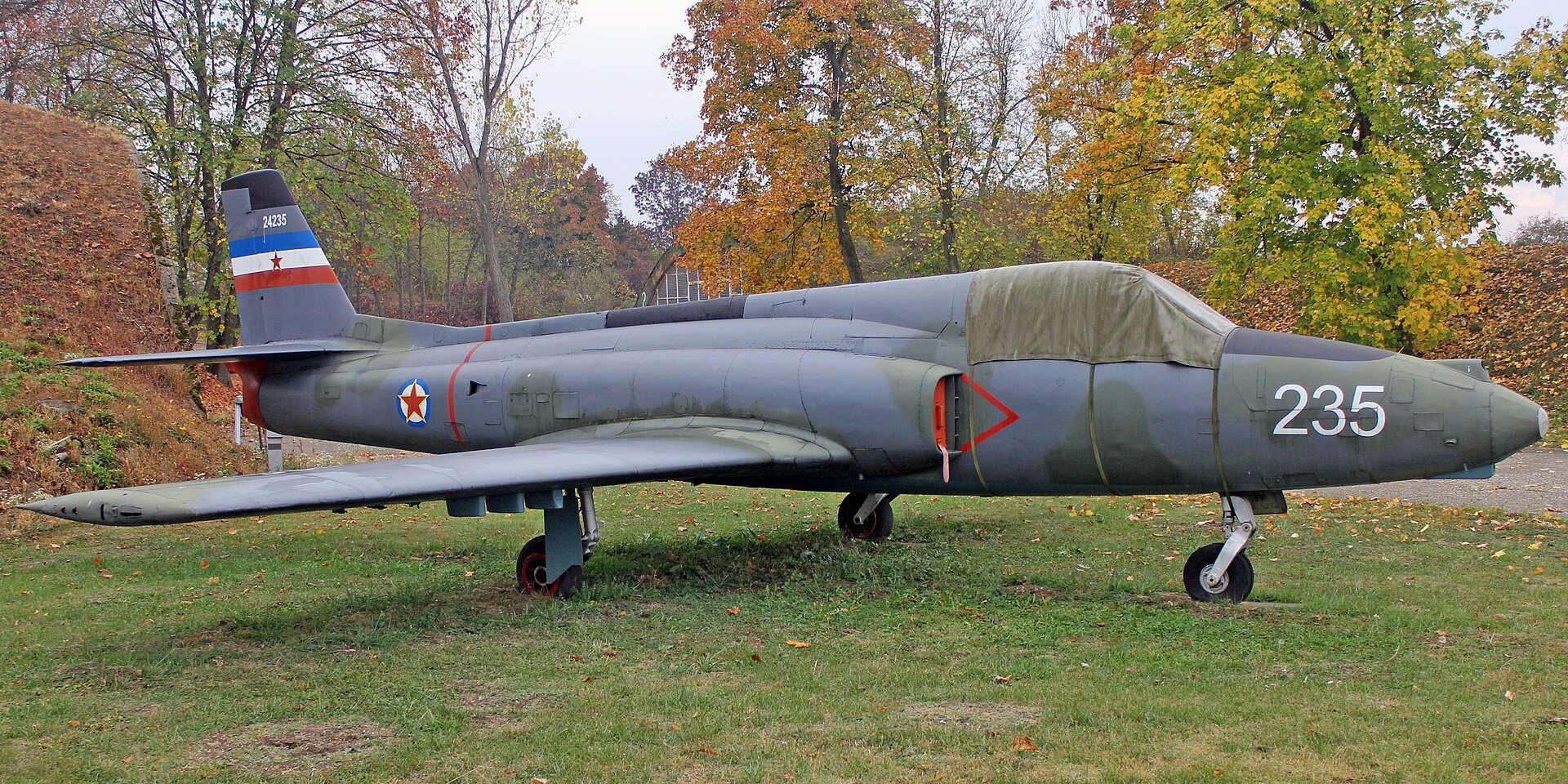
Soko J-21 Jastreb
Yugoslavia’s Light Attack Hawk
Yugoslavia’s home-built light attack jet: a single-seat Galeb with three guns that replaced the F-84 Thunderjet, flew in the Yugoslav wars and Zaire, and was the target in NATO’s first-ever combat action in 1994.
The Jastreb: how Yugoslavia turned its trainer into a ground-attack jet
In the mid-1960s the Yugoslav Air Force still relied on the American F-84 Thunderjet as its main jet fighter-bomber. It needed a replacement it could build at home, and it already had a good starting point: the G-2 Galeb two-seat jet trainer, designed by the Aeronautical Technical Institute in Belgrade and built by SOKO in Mostar. Engineers removed the rear cockpit, faired it over and used the space for avionics, strengthened the airframe for heavier loads and added three .50 in machine guns in the nose. The result, the J-21 Jastreb (“hawk”), first flew on 19 July 1965.
The Jastreb entered service on 31 December 1968, and between about 120 and 224 were built up to 1977, depending on the source, in single-seat attack, reconnaissance and two-seat training versions. It was simple and sturdy: a straight wing thick enough to hold fuel, a single licence-built Viper turbojet, Folland ejection seats, manual flying controls and a wide-track trailing-arm undercarriage that let it operate from rough strips. It could carry bombs, napalm, rocket pods and 127 mm rockets on eight pylons, and small rocket boosters helped it off short runways.
For two decades the Jastreb served quietly with Yugoslav fighter-bomber squadrons and was exported to Zambia and Libya. Then Yugoslavia broke apart. Jastrebs flew some of the first air attacks of the war in Croatia in 1991, and several were shot down by Croatian ground fire. On 28 February 1994, Jastrebs flown by Bosnian Serb and Croatian Serb pilots were intercepted by US F-16s over Bosnia in what became the first combat action in NATO’s history. The last Jastrebs left service with the Republika Srpska air force in 2006.
01The Jastreb over Bosnia: NATO’s first combat, 28 February 1994
Early on 28 February 1994, six Jastrebs and two Orao attack jets took off from Udbina, the Croatian Serb air base in Croatia, flown by a mix of Republika Srpska and Krajina Serb pilots and led by Lieutenant Colonel Zvezdan Pešić. The Jastrebs’ target was the arms factory at Novi Travnik. A British AWACS over Hungary detected them and ordered them to land or leave the no-fly zone; two F-16Cs of the USAF’s 526th Fighter Squadron, on patrol over Mostar, repeated the warning. It was ignored, or, as Serb accounts say, never received.
After the Jastrebs had bombed, Captain Robert G. Wright fired an AIM-120 that destroyed one, then shot down two more with AIM-9s. When Wright and his wingman Captain Scott O’Grady left to refuel, Captain Stephen L. Allen shot down a fourth with an AIM-9. The USAF credits four kills and says two Jastrebs escaped; Serb records say five were lost and only one, badly damaged, glided back to Udbina. Three pilots, including Pešić, were killed and two ejected.
It was the first combat action in NATO’s history and the only time NATO aircraft shot down fixed-wing aircraft during Operation Deny Flight. The no-fly zone was never challenged so directly again.
02The Jastreb in Croatia and Zaire: a light jet in dirty wars
When fighting broke out in Croatia in 1991, Jastrebs were among the first Yugoslav People’s Army aircraft in action. On 9 July 1991 two attacked a base of the Croatian National Guard near Ilok, the first Yugoslav air attack on Croatian forces. On 24 August 1991 at Vukovar, Luka Andrijanić, a volunteer with a 20 mm M55 anti-aircraft gun, shot down a Jastreb of the 252nd fighter-bomber squadron from Batajnica, the first JNA aircraft downed in the battle. In November 1991, during the battle of the Dalmatian channels, two Jastrebs were reportedly shot down near Brač and Šolta, and in August 1995, during Operation Storm, Croatian air defences shot down another near Bosanski Novi.
The Jastreb also turned up in Africa. During the First Congo War, Yugoslavia reportedly supplied three J-21s and a Galeb to President Mobutu’s Zaire, flown by Serbian mercenaries from Gbadolite. One pilot was killed during an ultra-low pass when his wing hit a lamp post and the wreck fell into a parade of young soldiers, killing dozens; the Yugoslav staff were soon expelled and the aircraft abandoned.
What makes the Jastreb special
A Galeb with a fairing where the instructor sat
The Jastreb and the G-2 Galeb trainer share almost everything. The obvious difference is the cockpit: the Jastreb’s rear seat was removed and covered by a fairing, and the space used for avionics and equipment. The structure was strengthened so that the Jastreb could carry a heavier warload. A two-seat NJ-21 version was also built for weapons training, giving the air force a complete family on one production line.
Built for rough strips
The Jastreb was designed for dispersed operations from poor airfields, in keeping with Yugoslavia’s defence doctrine. Its inward-retracting main gear gave a wide track, and trailing-arm legs with low-pressure tyres let it use unprepared or rough-surfaced strips. Two solid-fuel rocket boosters could be added to shorten the take-off run. The structure was conventional aluminium alloy stressed skin with few special features.
Three guns and eight pylons
The Jastreb carried three .50 in Browning AN/M3 machine guns in the nose and up to 800 kg on eight underwing pylons. The two inner pylons each took 250 kg: bombs, cluster bombs, napalm tanks, rocket pods with twelve 55 mm rockets, or drop tanks. The six outer pylons carried 127 mm VRZ-157 rockets. Aiming was by a simple K-14 gyro gunsight.
03The Jastreb’s cockpit and engine: simple by design
The pilot sat on a licence-built Folland Type 1-B ejection seat in an unpressurised cockpit under a canopy hinged to the right. Controls were manual and the instruments entirely conventional, so pilots coming from the Galeb felt at home. Power came from a single licence-built Viper Mk 531 turbojet of 13.32 kN (about 3,000 lbf). Internal fuel of 440 kg could be nearly doubled by 435 kg in two jettisonable wing-tip tanks, giving a range of about 1,520 km. Performance was modest, a top speed of about 820 km/h, but enough for close support against troops without modern air defences.
Soko J-21 Jastreb specifications
Specifications
- Crew
- 1 (J-21, RJ-21); 2 (NJ-21)
- Length
- 10.88 m (35 ft 8 in)
- Wingspan
- 10.56 m (34 ft 8 in)
- Height
- 3.64 m (11 ft 11 in)
- Wing area
- 19.43 m² (209 sq ft)
- Max take-off weight
- 5,100 kg (11,244 lb)
- Powerplant
- 1 × Viper Mk 531 turbojet, 13.32 kN (2,995 lbf); provision for 2 × 4.45 kN rocket boosters
- Maximum speed
- 820 km/h (510 mph)
- Cruise speed
- 740 km/h (460 mph) at 5,000 m (16,400 ft)
- Range
- 1,520 km (945 mi) with tip tanks
- Service ceiling
- 12,000 m (39,400 ft)
- Climb rate
- 21 m/s (4,130 ft/min)
- g limits
- +8 / −4
- Armament
- 3 × .50 in Browning AN/M3 machine guns; up to 800 kg (1,764 lb) on 8 pylons: bombs to 250 kg, napalm, 55 mm rocket pods, 6 × 127 mm VRZ-157 rockets
Costs & production
- Cost per flight hour
- No published figure; as a rough estimate, about the same as other single-Viper light jets of its era, low thousands of US dollars per hour in today’s money, based on its single small turbojet, simple systems and one-pilot crew
- Production
- Commonly given as 224 aircraft built by SOKO at Mostar up to 1977; some references give 121
- Programme
- Developed by the Aeronautical Technical Institute and VTI in Belgrade from the G-2 Galeb to replace the F-84 Thunderjet
04The Jastreb’s variants: attack, recce and trainer
- J-21 Jastreb: single-seat ground-attack aircraft.
- J-21E: export version.
- RJ-21 (IJ-21): single-seat tactical reconnaissance version with cameras.
- RJ-21E: export reconnaissance version.
- NJ-21: two-seat advanced and weapons trainer with light attack capability.
05The Jastreb’s operating costs: light, simple and cheap
No operating cost for the Jastreb has been published. It was designed to be cheap to build and maintain for a mid-sized air force: one small turbojet, manual controls, no radar and a conventional structure. Its costs per flight hour should therefore sit close to those of the jet trainers it was derived from. The figure above is an order-of-magnitude estimate based on that comparison, not a documented number.
The Jastreb from Mostar to its last flight
First flight
The J-21 Jastreb, a single-seat attack derivative of the G-2 Galeb, flies on 19 July.
Into service
Production starts at SOKO in Mostar; the type enters Yugoslav Air Force service on 31 December.
Production ends
The last Jastreb leaves the SOKO line.
War in Croatia
Jastrebs attack Croatian forces near Ilok on 9 July; one is shot down at Vukovar on 24 August.
To the Krajina
Federal Yugoslavia donates Jastrebs to the Croatian Serb air force at Udbina.
NATO’s first combat
On 28 February US F-16s shoot down four Jastrebs over Bosnia; Serb records say five were lost.
Operation Storm
Croatian air defences shoot down a Jastreb near Bosanski Novi on 7 August.
Zaire
Jastrebs flown by Serbian mercenaries for Mobutu are abandoned at Gbadolite during the First Congo War.
Retired
The Republika Srpska air force retires its last Jastrebs.
Stories & eyewitnesses: the Jastreb
Wright’s three missiles
On 28 February 1994 an F-16 pilot scored three kills in minutes.
Read the full story
Zvezdan Pešić’s last mission
A Serb brigade commander led the raid himself.
Read the full story
Luka Andrijanić at Vukovar
A teenage gunner brought down the first JNA jet of the battle.
Read the full story
The first air attack of the Croatian war
On 9 July 1991 two Jastrebs struck near Ilok.
Read the full story
Low over Brač and Šolta
In November 1991 Croatian gunners claimed two Jastrebs over the islands.
Read the full story
Disaster at Gbadolite
A mercenary’s low pass killed dozens in Zaire.
Read the full story
Replacing the Thunderjet
Yugoslavia built its own successor to an American fighter-bomber.
Read the full story
A hangar full of hawks in Belgrade
Belgrade’s aviation museum holds more than two dozen Jastrebs.
Read the full story
The Jastreb in pictures
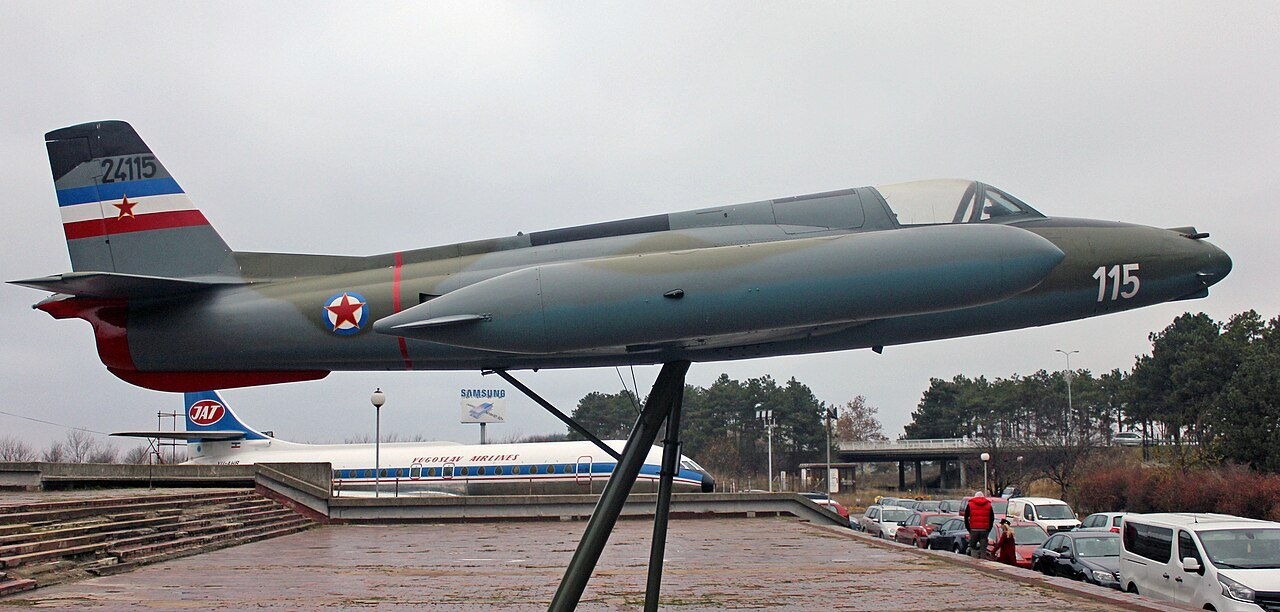
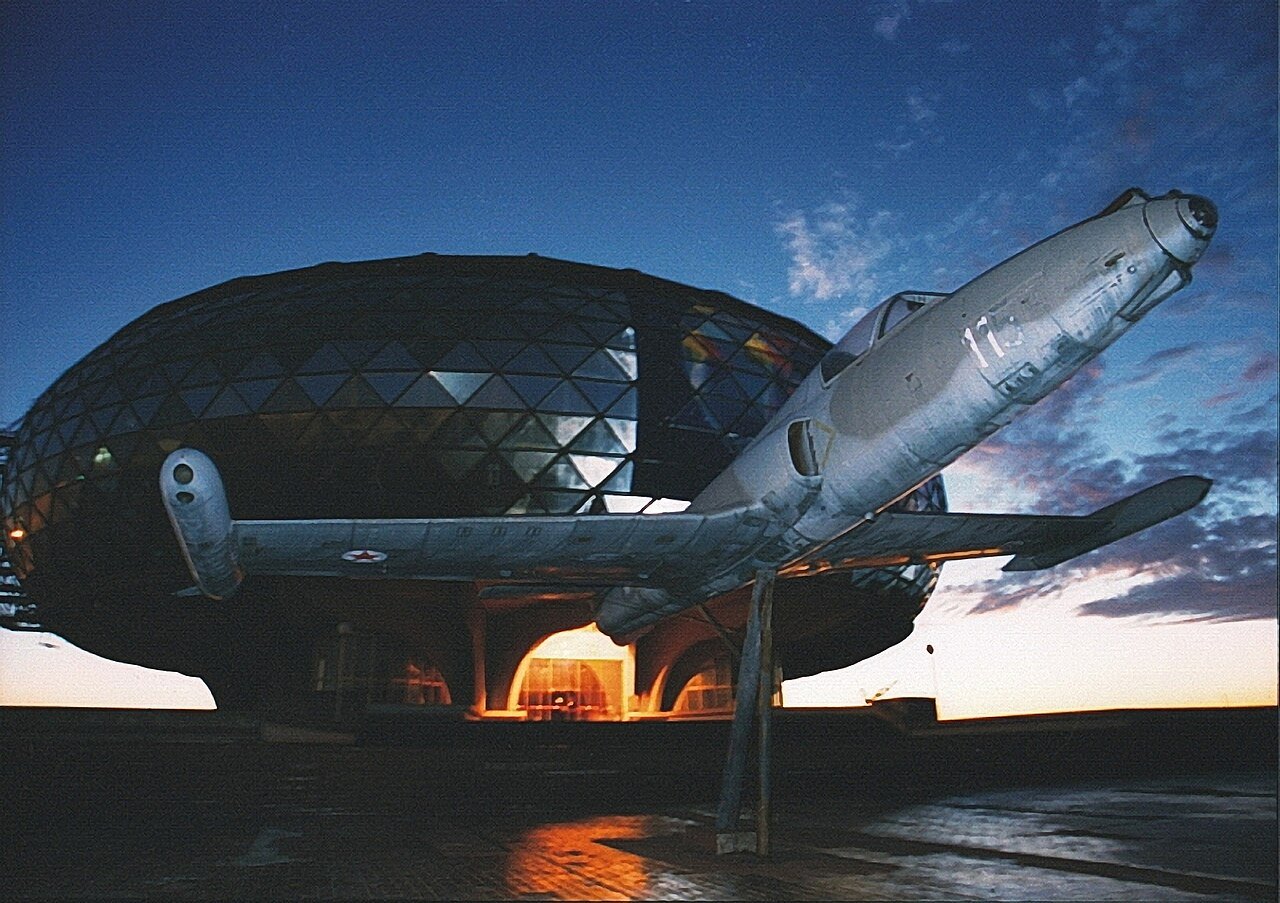
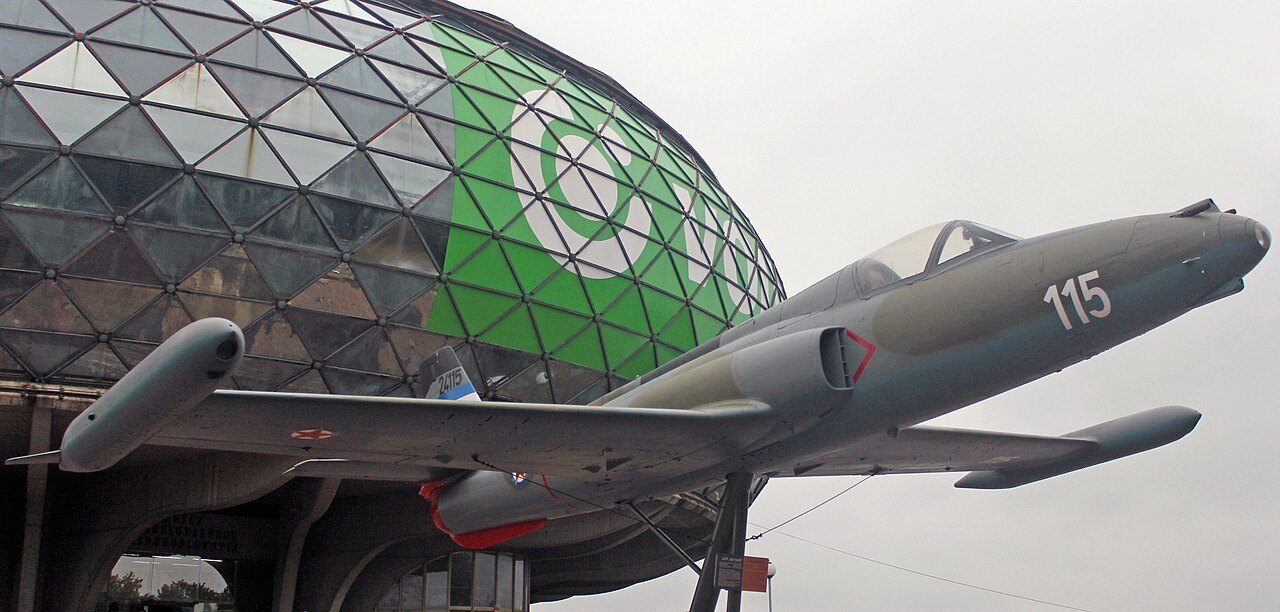
Where the Jastreb flies and flew
The Jastreb’s record
The Jastreb spent its first two decades in peacetime training and exercises, then fought in the wars of Yugoslavia’s break-up from 1991 to 1995 and, reportedly, in Zaire. Its best-known day was a defeat: the loss of at least four aircraft to US F-16s over Bosnia in NATO’s first combat action.
See how training and combat types compare in the military aircraft statistics database. Figures are approximate.
Everything people ask about the Jastreb
Can I fly in a Soko J-21 Jastreb?
What is the difference between the Jastreb and the Galeb?
What does Jastreb mean?
Were Jastrebs shot down by NATO?
How many Jastrebs were built?
Who flew the Jastreb?
Where can I see a Jastreb?
You can’t fly the Jastreb.
These, you can.
Most of this museum you can only look at. These genuine military jets you can fly yourself with MiGFlug — with aerobatics and time on the controls.
 Fly the L-39 AlbatrosThe world’s most-flown jet trainer — aerobatics included
 Fly the F-104 Starfighter“The missile with a man in it”
 Fly the MiG-21The Cold War’s most-produced jet
 Fly the T-33 Shooting StarAmerica’s first jet trainer
 Fly the DH VampireA piece of early jet history
 Fly the S.211Agile Italian jet trainer
 Fly the MB-326The classic Aermacchi jet
 Fly the MiG-15The Soviet legend of the Korean War
Continue the tour
Every fact, checked
- Manned Aircraft Losses over the former Yugoslavia, 1994-1999Daniel L. Haulman, Air Force Historical Research Agency, 2009: Wright, Allen and O’Grady on 28 February 1994, four J-21s destroyed, two escaped to Udbina
- Operation Deny FlightGlobalSecurity: four aircraft shot down on 28 February 1994, the Alliance’s first military engagement
- Peace support operations in Bosnia and HerzegovinaNATO: the 28 February 1994 shoot-down as the first combat operation in NATO’s history
- U spomen na Luku AndrijanićaCity of Vukovar: the 24 August 1991 Jastreb shoot-down and the memorial unveiled on 7 November 2023
- Muzej Jugoslovenskog Ratnog VazduhoplovstvaAviation Museum guide: 31 Jastrebs (J-21, IJ-21, NJ-21) and Galebs held at the Belgrade museum
- SOKO J-21 JastrebAviations Militaires: first flight 19 July 1965, service entry 31 December 1968, operators and production figure
- SOKO J-21 JastrebMilitary Factory: specifications, operators and service in the Yugoslav wars and Zaire