
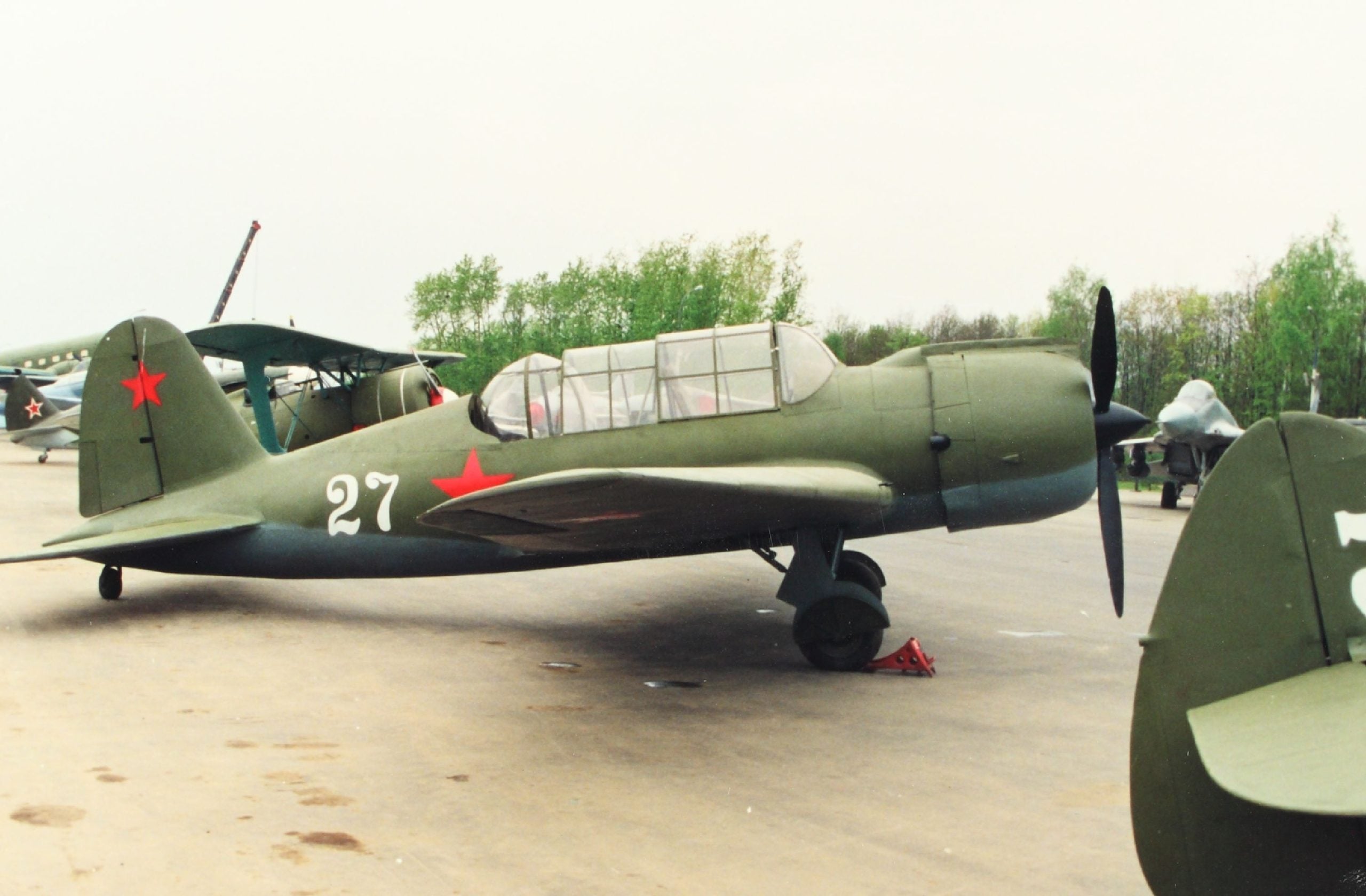
Sukhoi Su-2
Pavel Sukhoi’s first aircraft
A rugged Soviet light bomber thrown into the fire of 1941 — the first machine ever to carry the Sukhoi name, and the aircraft in which the only woman to ram an enemy plane made her last flight.
Pavel Sukhoi’s first aircraft, forged for a war it could not survive
The Sukhoi Su-2 was born of a Stalin-era competition. In 1936 the Soviet leadership issued a requirement — code-named “Ivanov” — for a simple, mass-producible multi-role aircraft that could bomb, scout and support the army. Several design teams answered. The winning entry came from a brigade led by Pavel Sukhoi, then working inside Andrei Tupolev’s design organisation, which is why the prototype first flew under the Tupolev designation ANT-51, in the hands of test pilot Mikhail Gromov, on 25 August 1937.
Ordered into production as the BB-1 (blizhniy bombardirovshchik, “short-range bomber”), it was renamed the Su-2 in 1940 under a new system that used the chief designer’s initials — making it the very first production aircraft to bear the Sukhoi name. It was a clean, low-wing monoplane of mixed construction: a plywood-skinned wooden fuselage married to metal wings, powered by an air-cooled radial and crewed by two, a pilot and a navigator who doubled as rear gunner. On paper it was thoroughly modern for the late 1930s.
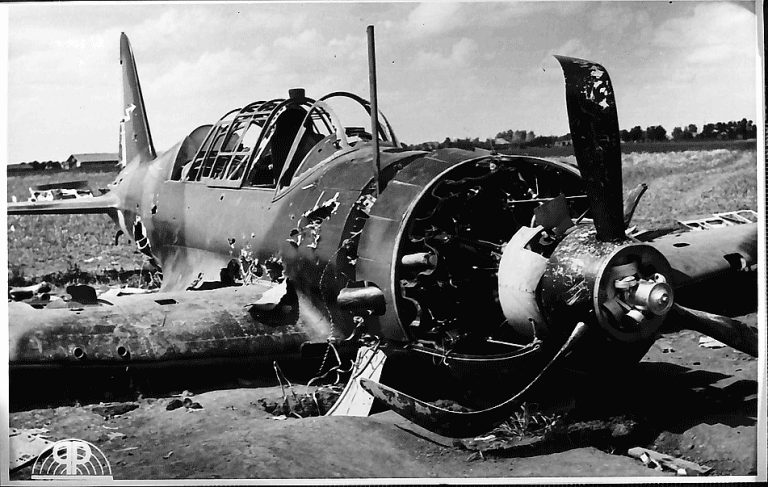
Then came 22 June 1941. When Germany invaded, only around a hundred Su-2s were in front-line service, and they were committed immediately to daylight bombing — often without fighter escort, against an enemy with air superiority. Losses were severe. The aircraft itself was sound and notably rugged, able to bring damaged crews home, but the tactical situation was hopeless. By 1942 it was being withdrawn from bombing and shifted to reconnaissance and artillery-spotting, roles in which it served usefully until worn out and superseded by the Il-2, Pe-2 and Tu-2. Barely 900-odd were built, and today not a single complete original survives.
01The Sukhoi Su-2’s origins: how Stalin’s “Ivanov” contest launched the Sukhoi name
The “Ivanov” requirement of 1936 — reportedly named after Stalin’s own telegraph pseudonym — asked Soviet designers for a rugged, easily-built aircraft able to switch between light bombing, reconnaissance and ground attack. Sukhoi’s brigade, operating under Tupolev, produced the ANT-51, and it won. When the Soviet designation system was reorganised in 1940 to credit the lead designer, the BB-1 became the Su-2. It is easy to overlook, but this modest bomber is the ancestor of one of the most famous names in combat aviation: every Su-27, Su-34 and Su-57 traces its designation lineage back to this two-seat machine of 1937.
What makes the Su-2 special
A wood-and-metal airframe built to be mass-produced
The Su-2 used mixed construction: a semi-monocoque fuselage of wooden formers and plywood skin, mated to metal (largely duralumin) wings with fabric-covered control surfaces. The layout was deliberately simple, reflecting the “Ivanov” brief for an aircraft that ordinary factories could turn out in quantity. The crew sat behind roughly 9 mm of armour, and the undercarriage retracted — advanced touches for a Soviet type of the late 1930s.
The Shvetsov M-88B radial
Production Su-2s were built around the air-cooled Shvetsov M-88B two-row radial of roughly 1,000 hp class (higher at rated altitude), after earlier prototypes tried the M-62 and M-87. It gave a top speed commonly cited between ~455 and 486 km/h — respectable for 1940, but soon eclipsed as the war accelerated engine development on all sides.
Modest guns, real bombs, a vulnerable gunner
Defensive and offensive armament centred on the rifle-calibre 7.62 mm ShKAS machine gun — several fixed in the wings plus one or two on flexible mounts for the navigator/gunner. It carried around 400 kg of bombs normally and up to 600 kg, and could sling RS-82/RS-132 rockets. Rugged though it was, a single rear gun was never enough against massed Bf 109s in 1941.
02The Sukhoi Su-2’s construction: wood, metal and the logic of mass production
Soviet industry in the late 1930s was short of light alloys and skilled labour, so mixed wood-and-metal construction was a pragmatic norm. The Su-2’s plywood-covered wooden fuselage was cheap and easy to build and repair, while the metal wing carried the loads and the retractable gear. The trade-off was weight and, in a wooden structure, vulnerability to fire and weather. It was a sensible design for its moment — but the moment passed quickly once cannon-armed fighters and purpose-built attack aircraft such as the Il-2 arrived.
03The Sukhoi Su-2’s firepower: modest guns, a lone gunner and heavy 1941 losses
The Su-2 was a light day-bomber, not a fighter, and its armament reflects that. Rifle-calibre ShKAS guns hit hard for their weight but lacked the reach and punch of the 20 mm cannon German fighters carried. With a single navigator-gunner covering the rear, an unescorted Su-2 formation attacked in daylight was desperately exposed. Contemporary Soviet accounts record entire flights being cut down; the aircraft’s ruggedness saved some crews, but the loss rate in the opening months of the war was punishing and drove the type out of the bombing role by 1942.
Sukhoi Su-2 full specifications
Baseline note: the figures are for the production Su-2 with the M-88B engine, the version that equipped the short-range bomber regiments (bombardirovochnyye aviatsionnyye polki, BAP) in June 1941 and the only one built in quantity. They are taken from Shavrov’s tabulation of the state-test results, which is the closest thing to a factory record in the public domain. Two traps are worth naming. First, the specification most often printed in English — 486 km/h, ceiling 8,400 m, 1,400 hp — belongs to the M-82-engined Su-2 and Su-4 of 1942, not to the aeroplane that fought the summer of 1941. Second, the widely quoted 512 km/h was recorded by a lightened test machine stripped of external bomb and rocket racks; the squadron aircraft did 468. Deltas for the earlier M-87 aircraft, for the lightened M-88B, for the M-82 machines and for the armoured ShB are given in grey.
Dimensions & weights
- Crew
- 2 (pilot and navigator-gunner, with duplicated flying controls — navigators brought a good many shot-up Su-2s home)
- Length
- 10.25 m (33 ft 8 in); 10.46 m (34 ft 4 in) on the M-82 aircraft, which is the figure most tables print for all of them
- Wingspan
- 14.30 m (46 ft 11 in)
- Height
- 3.94 m (12 ft 11 in)
- Wing area
- 29.00 m² (312 sq ft)
- Empty weight
- 2,970 kg (6,548 lb); 2,816 kg (6,209 lb) for the M-87A aircraft, 3,220 kg (7,099 lb) for the M-82
- Normal loaded weight
- 4,345 kg (9,579 lb); 4,150 kg (9,149 lb) for the lightened test aircraft
- Wing loading
- 150 kg/m² (30.7 lb/sq ft)
- Power loading
- 4.3 kg/hp (9.5 lb/hp)
- Fuel
- 700 litres (154 imp gal, 185 US gal) in three tanks: 425 l in the fuselage behind the engine, 2 × 140 l in the outer wings. Unprotected — no self-sealing
- Armour
- 9 mm pilot’s back plate; 9 mm plate below and beside the gunner
- Bomb load
- 400 kg normal (882 lb), 600 kg maximum (1,323 lb); internal bay limited to 400 kg
- Undercarriage track
- 2.72 m (8 ft 11 in); 750 × 250 mm braked mainwheels, retractable tailwheel, wooden skis with aluminium soles fitted in winter
Performance
- Maximum speed, altitude
- 468 km/h (291 mph)
- Maximum speed, sea level
- 375 km/h (233 mph)
- Lightened test aircraft
- 512 km/h (318 mph) at 7,100 m and 410 km/h (255 mph) at sea level, without external bomb or rocket racks — the figure squadron aircraft never saw
- M-82 aircraft, for comparison
- 486 km/h (302 mph) at 5,850 m, 430 km/h (267 mph) at sea level, ceiling 8,400 m — faster low down, worse at height, and the specification usually printed as "the Su-2"
- Landing speed
- 136 km/h (85 mph)
- Time to 5,000 m
- 12 min (11.3 min for the lightened aircraft, 9.8 min with the M-82)
- Service ceiling
- 9,000 m (29,530 ft); 9,120 m (29,920 ft) lightened
- Range
- 1,190 km (740 mi)
- Take-off run
- 380 m (1,250 ft)
- Landing run
- 290 m (950 ft)
- Working bombing altitude
- 1,000–1,200 m, 3,000 m maximum — a limit set by the sight, not the aeroplane, and the reason nobody expected fighter attacks from below
- Useful speed band as a spotter
- 220–450 km/h (137–280 mph) — the quality that kept the type in service as an artillery observer after it was withdrawn as a bomber
Propulsion & systems
- Engine
- 1 × Tumansky M-88B, 14-cylinder two-row air-cooled radial (the ANT-51 prototype flew on an 820 hp Shvetsov M-62; production BB-1s began with the M-87A and M-87B, which broke constantly; the Su-4 and late Su-2s used the 1,400 hp Shvetsov M-82)
- Power
- 1,000 hp (746 kW) at 6,000 m; 950 hp (708 kW) nominal at sea level
- Propeller
- VISh-23, three-blade, variable pitch, 3.25 m (10 ft 8 in) diameter
- Engine reliability
- The programme’s central problem. Four M-88Bs were changed during one 1941 state-test series, three of them failing inside three hours with scored and burnt pistons. Directors and designers at the engine works were arrested over the M-87’s failures
- Structure
- Mixed. Wooden semi-monocoque fuselage and fin of 0.5 mm birch veneer laid at 45° over a mould; all-metal two-spar wing in D16 with 30KhGSA steel spar booms; fabric-covered control surfaces. Designed for flow assembly with full parts interchangeability, which was unusual in Soviet practice
- Turret
- MV-5 shielded turret for the navigator. About 250 aircraft were built with the lighter TSS-1 instead in spring 1941; the head of NII VVS judged the Su-2 unacceptably weakened by it and the MV-5 was restored at the end of May 1941
- Bombsight
- OPB-1M in the navigator’s floor. Castor oil thrown from the engine breather regularly blinded it and the lower glazing — a routine, unglamorous defect that mattered more than most
- Camera
- AFA-13 on the starboard side of the navigator’s station; AFA-1 and NAFA-19 installations were developed for the dedicated reconnaissance conversion
- Radio
- RSB "Dvina" in the navigator’s cabin. Normally stripped out of bombers to save weight and kept only in reconnaissance and artillery-spotting aircraft — a false economy that is visible in the loss reports
- Navigation
- RPK-2 radio direction finders were fitted to 99 aircraft at Kharkov, Bobruisk, Kiev and Vitebsk in the last weeks before the invasion
- First flight
- 25 August 1937, as the ANT-51 "Ivanov", Mikhail Gromov at the controls
- Service entry
- Accepted for production as BB-1 in March 1939; first deliveries late 1940; renamed Su-2 in December 1940; in units from January 1941
- Number built
- 893 by factory records (Factory 135 Kharkov 729, then 56 more after evacuation to Molotov; Factory 207 Dolgoprudny 92; Factory 31 Taganrog 16). English sources almost always print 910, which is the Sukhoi company museum’s figure.
- Unit cost
- ~430,000 roubles (1940 works cost at Factory 135; judged very high at the time, and one of the arguments used against the type)
04The Sukhoi Su-2’s operating costs: why no reliable price exists
The Su-2 was a wartime Soviet state product, built to plan rather than sold on any market, so there is no reliable unit cost and no credible cost-per-flight-hour figure for it in the open record. Soviet aircraft of this era were costed internally in roubles under a command economy, in terms that do not translate cleanly into comparable dollar prices. Any specific cost figure you may see attached to a Su-2 should be treated as a guess rather than a sourced number.
Armament & payload
The Su-2 went to war with three rifle-calibre machine guns because a committee had taken the other three away
The armament every reference gives for the Su-2 — four to six 7.62 mm ShKAS in the wings — describes the drawing, not the aeroplane. Four fixed wing guns and a ventral hatch gun were designed, and Shavrov lists six guns in total. But in September 1940, when the Committee of Defence reviewed the gun and cannon armament of every production aircraft with a view to strengthening it, the BB-1 was the single type it went the other way on: two of the four wing guns were deleted and the ventral ShKAS was removed altogether. Pavel Sukhoi had himself argued that a hatch gun and armour for the navigator would add weight and shift the centre of gravity aft, and unit trials had concluded that attacks from below were improbable at the 1,000–1,200 m working altitude the bombsight imposed. Both judgements were wrong within a year. The aircraft that met the Luftwaffe in June 1941 carried two fixed ShKAS in the outer wings and one on the navigator’s MV-5 turret: three guns of rifle calibre, against fighters carrying cannon. Units cut the ventral hatch and refitted an MV-2 mount locally and unofficially, and later production restored the wing pair to four, so any given airframe’s fit depends on when it was built and which regiment had it.
Gun
- As delivered from September 1940: 2 × 7.62 mm ShKAS fixed in the outer wing panels outside the propeller disc, 650 rounds per gun, fired from triggers on the control column.
- 1 × 7.62 mm ShKAS on the navigator’s shielded MV-5 turret, later MV-5m. About 250 aircraft carried the lighter TSS-1 instead until it was reversed out in May 1941.
- As designed and as later restored: 4 × ShKAS in the wings, 5 guns in total; some aircraft carried 1–2 movable guns at the navigator’s station.
- Ventral hatch gun: deleted by the September 1940 decision, then cut back in by units in the field with an MV-2 mount as soon as the war showed why it had been there.
- Su-4 and ShB: 2 × 12.7 mm Berezin BS in the centre section replacing the wing ShKAS — the armament the aircraft should have had in 1941.
Air-to-air
- None intended. The two fixed ShKAS were strafing guns, not fighter armament.
- Su-2s were nonetheless pressed into service as improvised single-seat fighters in the first weeks of the war, when Soviet fighter strength collapsed.
- The turret ShKAS could hit German fighters and repeatedly did — combat reports describe bursts striking Bf 109 and Bf 110 engine installations without stopping the attack. Rifle calibre was simply not enough.
- On 22 June 1941 an Su-2 of 211 BAP became the first aircraft shot down by Alexander Pokryshkin, who did not recognise the silhouette of a new and closely held Soviet type. Ivan Pstygo, flying in the same formation, watched it happen; both men became marshals of aviation.
Air-to-surface guided
- None carried. No guided air-to-surface weapon existed in Soviet service at the time.
- The nearest thing was the RBS-132 rocket-propelled armour-piercing shell, trialled successfully on Su-2 No. 070403 at Podlipki in late September 1941.
- The trial was wasted: the ammunition commissariat was producing only standard RS-82 rockets, and Sukhoi was ordered to convert the installation back.
- A pattern for the whole programme — the right idea, arriving after the decision that made it irrelevant.
Bombs
- Internal bay beneath the pilot’s cockpit, on cassette racks: up to 400 kg (882 lb) of small bombs in fixed combinations — 30 × 8 kg, 30 × 10 kg, 20 × 15 kg, 20 × 20 kg, 12 × 25 kg, 4 × 50 kg or 4 × 100 kg.
- External: two 100 kg bombs under the centre section, or 250 kg bombs, or smaller weapons on up to 14 racks.
- Maximum total 600 kg (1,323 lb). Internal carriage was Sukhoi’s own idea, adopted for speed at a time when almost every comparable aircraft hung its bombs in the airstream.
- The bay was the aircraft’s best feature and its tightest constraint: it set the 400 kg internal limit that no amount of external load could make good.
Rockets
- 8 × RS-132 or 10 × RS-82 unguided rockets on underwing rails, fitted during the war.
- From mid-October 1941 every production aircraft was to have the attachment points and every fourth aircraft the rails themselves.
- Rockets were the Su-2’s only real ground-attack punch, and the reason regiments kept flying it as a ground-attack shturmovik it was never designed to be.
- Using a light bomber that way is precisely what drove the losses of summer 1941, and the aircraft has carried the blame for the doctrine ever since.
Pods & other stores
- AFA-13 camera in the navigator’s station — standard fit, and the basis of the reconnaissance role.
- RSB "Dvina" radio, retained on reconnaissance and artillery-spotting aircraft and stripped from bombers.
- KD-2 underwing cassettes and the NV-5 low-level bombsight were trialled in 1941 but not adopted for production.
- Wooden skis with aluminium soles, folded up against the centre section when retracted, for operations from snow.
- A photo-reconnaissance conversion with an additional fuel tank was worked out at Factory 289 in 1941.
Three typical loadouts
- Short-range bombing, June 1941
- 400 kg internal in the bay — typically 4 × FAB-100 — run in at 1,000–1,200 m on the OPB-1M, with 2 × ShKAS forward and one on the turret. The load the regiments in the Kiev and Odessa districts actually flew, and thin in every dimension: bomb weight, gun calibre and altitude all set by compromises made before the war.
- Ground attack, autumn 1941
- 8–10 × RS-82 rockets underwing plus a partial bay load, strafing with the wing guns. This is the mission that killed Su-2 crews, and it is the mission the aircraft was never designed for: no armour worth the name around the engine, no heavy forward armament, no protection for the fuel.
- Artillery spotting, 1942–1943
- Bombs deleted, RSB radio and AFA-13 camera retained, working between 220 and 450 km/h over the corps front. NII VVS found the Su-2 clearly better at this than a two-seat Yak-7, and it is the role the survivors flew until they wore out. The Su-2’s all-round view, the feature Sukhoi had designed in for reconnaissance, was what made it good at the job.
Sourcing caveat: gun fits above follow Khazanov and Gordyukov’s account of the September 1940 Committee of Defence decision and the airframe descriptions in Shavrov. The two disagree because they describe different production periods — Shavrov’s six-gun figure is the design and the later fit, the three-gun figure is what left the factories after September 1940. Any single number for "the Su-2’s armament" is therefore wrong for some of the aircraft.
Variants
The Su-2 was Pavel Sukhoi’s first production aeroplane, and the "catastrophic losses" it is remembered for do not survive the arithmetic
The aircraft began as "Ivanov", a 1936 competition initiated by Stalin for a multi-purpose machine that could find a target by reconnaissance and then attack it — a mass-produced aeroplane simple enough to be built in numbers no other class of combat aircraft could match. TsAGI, Polikarpov, the Kharkov institute, Grigorovich, Kocherigin and Ilyushin all entered. The winner was a team under Pavel Sukhoi working inside Tupolev’s bureau, whose all-metal two-seat low-wing design flew as the ANT-51 on 25 August 1937. Sukhoi was given his own bureau on Stalin’s instruction, and this was the first aircraft to reach production under his name.
The reputation is the harder thing to get right. In 1941 the VVS flew roughly 5,000 Su-2 sorties for 222 aircraft lost in combat or missing — one loss per 22.5 sorties, against a Soviet bomber average that year of one per 14. In the 66th Air Division, which flew Pe-2s and Su-2s side by side, the Pe-2 lost one aircraft per 32 sorties and the Su-2 one per 71, despite the Petlyakov’s better paper performance. Gordon and Khazanov’s wider tabulation puts the Su-2 at 80 sorties per loss against 54 for the Pe-2, 26 for the two-seat Il-2 and 13 for the single-seater.
What did happen is that regiments were burned out at appalling speed. 103 and 135 BAP had been redeployed to Novozybkov by 28 June 1941 with 38 and 43 Su-2s left on strength out of an establishment of 64 each. That is a week’s war. But the cause was a doctrine that sent unarmoured light bombers to strafe in daylight without escort, not a bad aeroplane. The verdict on the Su-2 is that it was obsolete as a concept the day it was fielded, competently designed, and blamed for the decisions of the men who used it.
- ANT-51 "Ivanov" / SZ-1, SZ-2 (1937–1938, 2 built)
- All-metal prototypes on the 820 hp Shvetsov M-62. 403 km/h at 4,700 m — judged insufficient, but the airframe was sound enough to justify re-engining. "SZ" stood for Stalinskoye Zadaniye, Stalin’s assignment.
- SZ-3 (1938–1939, 1 built)
- M-87, then M-87A: 468 km/h at 5,600 m, fuel cut from 930 to 700 litres, wing gun ammunition raised to 850 rounds each. Test pilot Boris Pokrovsky called it "a model of a thought-out, cultured machine". Accepted for production in March 1939.
- BB-1 (1939–1940)
- Production form, redesigned in twenty days into mixed wood-and-metal construction because aluminium was scarce and expensive. Built at Factory 135 in Kharkov, 31 in Taganrog and 207 in Dolgoprudny. Taganrog was switched to LaGG-3 fighters before delivering a single one and passed 70 near-complete airframes to Dolgoprudny.
- Su-2 (M-88, M-88B) (December 1940–1941, the bulk of 893)
- Renamed after its designer in December 1940 under the new designation system. The M-88B gave 1,000 hp at 6,000 m and 468 km/h. The 1941 plan called for 1,150 aircraft; the first half of the year was actually overfulfilled at 119 per cent, against an industry bomber average of 86.
- Su-2 lightened test aircraft (December 1940–March 1941, 1 modified)
- Aircraft No. 1/6, with the oil cooler moved into the centre section, a reprofiled cowling and intake, and the bulky MV-5 replaced by a TSS-1 turret. 33–38 km/h faster and 700 m higher than standard; the first Su-2 past 500 km/h. Production rushed the TSS-1 into service before the turret had passed its own tests, and it had to be withdrawn.
- Su-2 (M-82) (1941–1942, small numbers)
- The 1,400 hp Shvetsov radial ordered onto the Su-2 by NKAP order No. 438 of 13 May 1941. 486 km/h at 5,850 m, much better low down, but shorter-ranged and with a dangerously shallow nose-over angle on landing — 18.5° against a required 26.5°.
- SZ-1 with M-63TK (1940, 1 conversion)
- Turbocharged high-altitude experiment. Cracked turbo ducting and an oil pump without the altitude capability to match; passed to LII and forgotten when the war began.
- "MN" dubler (1940, 2 planned)
- Modified BB-1s built at the new Factory 289 for the 2,100 hp Urmin M-90. The engine never left development; one airframe was re-engined with the M-81, which was itself killed off as a dead end in November 1940.
- ShB / BB-2 (1940, 1 prototype)
- Armoured attack-bomber development with an M-88, heavier armour, cleaner aerodynamics and main gear that rotated 90° before retracting aft into the wings, in the manner of the P-40. Bomb load raised to 600 kg. The prototype was lost on test and the Il-2 made it redundant.
- Su-4 / BB-3 (1941–1942, small series)
- Intended for the M-90, built with the M-82. Wooden wing outer panels on metal spars because of the duralumin shortage; wing armament finally upgraded to two 12.7 mm Berezin BS. 450 km/h at sea level, 6,000 m in 10.5 minutes. Production ended in early 1942 when the airframe kits evacuated from Kharkov ran out.
- UTB (1946)
- Not an Su-2 but its epilogue: Sukhoi’s bureau designed the low-powered ASh-21 bomber trainer on the Tu-2 airframe, closing the circle with the man in whose brigade he had drawn the Ivanov nine years earlier.
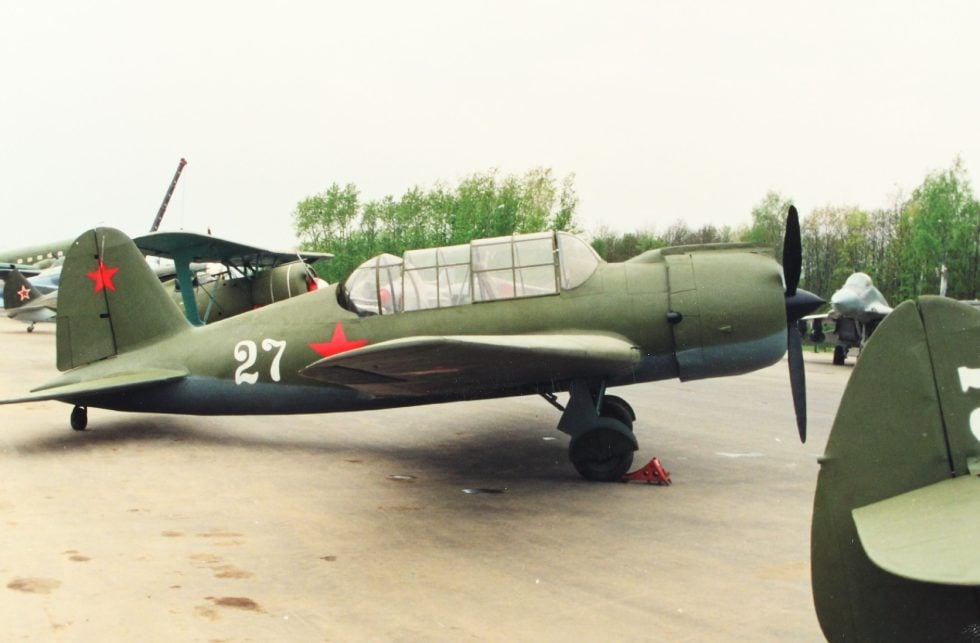
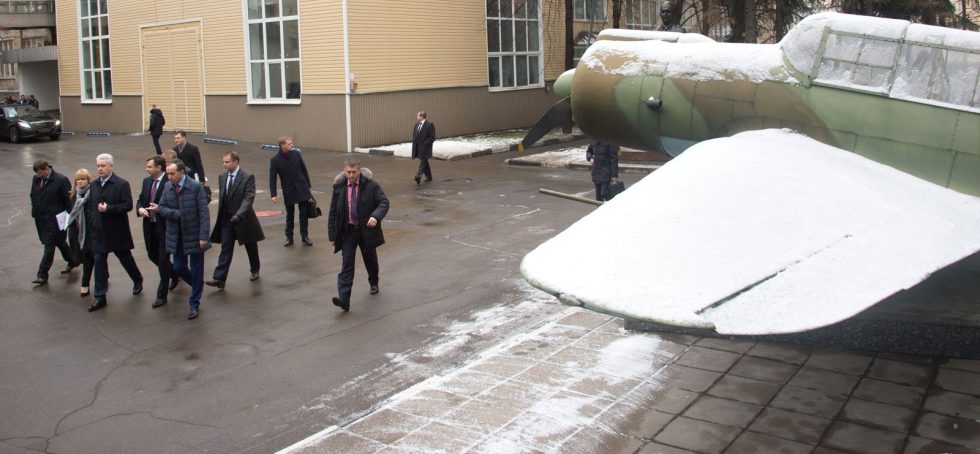
Closing caveat: no original Su-2 survives anywhere. Every aircraft displayed as one is a reproduction. The machine in the Stalingrad Battle panorama museum at Volgograd is a full-size metal replica built to original drawings recovered from the archive on Pavel Sukhoi’s personal instruction, restored by Sukhoi company specialists in 2010; the Central Air Force Museum at Monino holds a mock-up, reported as a wooden one made in 1982; and the aircraft in the Great Patriotic War Museum on Poklonnaya Gora in Moscow was built in 1995. One further caution about the type’s best-known story: the ramming attributed to Senior Lieutenant Yekaterina Zelenko on 12 September 1941 near Romny, the only air ramming ever credited to a woman, is contested. Her posthumous 1941 award recommendation and the 135 BAP combat reports do not describe a ramming, later accounts disagree over whether she struck with a wing or the tail, a 1965 petition for the Hero of the Soviet Union was refused for want of evidence, and Mikhail Timin’s archival work concludes she was shot down by a pair of Bf 109Fs of II./JG 51 which recorded no losses. The Hero of the Soviet Union was finally awarded on 5 May 1990. The ramming should be reported as a claim, not as a fact.
From Stalin’s contest to a vanished type
The “Ivanov” requirement
The Soviet leadership calls for a simple, mass-producible multi-role aircraft; Sukhoi’s brigade, working under Tupolev, takes up the challenge.
First flight
The prototype ANT-51 flies on 25 August, piloted by Mikhail Gromov.
Becomes the Su-2
Ordered into production as the BB-1, the design is renamed Su-2 — the first production aircraft to carry the Sukhoi name.
Thrown into Barbarossa
About 100 Su-2s are in service when Germany invades. They fly daylight bombing missions and take heavy losses; one is even downed by future ace Alexander Pokryshkin in a friendly-fire error on day one.
Zelenko’s ram
On 12 September, Snr Lt Yekaterina Zelenko rams a German fighter over Ukraine — the only aerial ram ever carried out by a woman.
Withdrawn from bombing
Outclassed as a bomber, the Su-2 shifts to reconnaissance and artillery observation; production ends after roughly 910 aircraft.
Last service
Surviving Su-2s soldier on as artillery spotters and hacks before being retired as newer types take over.
No original left
No complete original airframe is known to survive; a reconstructed Su-2 is displayed at the Central Air Force Museum, Monino.
From the front: twelve Su-2 stories
Stalin’s “Ivanov” contest
A 1936 requirement for a simple multi-role aircraft launched the design that became the Su-2.
Read the full story
Gromov takes it up
The prototype ANT-51 first flew on 25 August 1937 in the hands of the celebrated test pilot Mikhail Gromov.
Read the full story
The first Sukhoi
When the Soviet designation system was reworked in 1940, the BB-1 became the Su-2 — the first aircraft to carry the Sukhoi name.
Read the full story
Shot down by his own side
On the first day of the invasion, a Su-2 was downed by future top ace Alexander Pokryshkin, who did not recognise the new type.
Read the full story
Daylight without escort
Committed to unescorted daylight bombing against an enemy with air superiority, Su-2 units suffered severe losses in 1941.
Read the full story
Bringing crews home
For all its vulnerability, the Su-2 earned a reputation as a rugged machine that could absorb damage and still fly.
Read the full story
Zelenko’s taran
Senior Lieutenant Yekaterina Zelenko rammed a German fighter over Ukraine — the only aerial ram ever performed by a woman.
Read the full story
The army’s eyes
Withdrawn from bombing, the Su-2 found a second life as a reconnaissance and artillery-observation aircraft.
Read the full story
The M-82 and Su-4
Attempts to keep the design competitive with a more powerful M-82 engine led to the Su-4, but the war had moved on.
Read the full story
Out of production
Roughly 910 Su-2s were built before production ended in 1942, overtaken by the Il-2, Pe-2 and Tu-2.
Read the full story
The vanished aeroplane
No complete original Su-2 is known to survive anywhere in the world today.
Read the full story
The Monino reconstruction
A reconstructed Su-2 stands at the Central Air Force Museum at Monino, keeping the shape of the type alive.
Read the full story
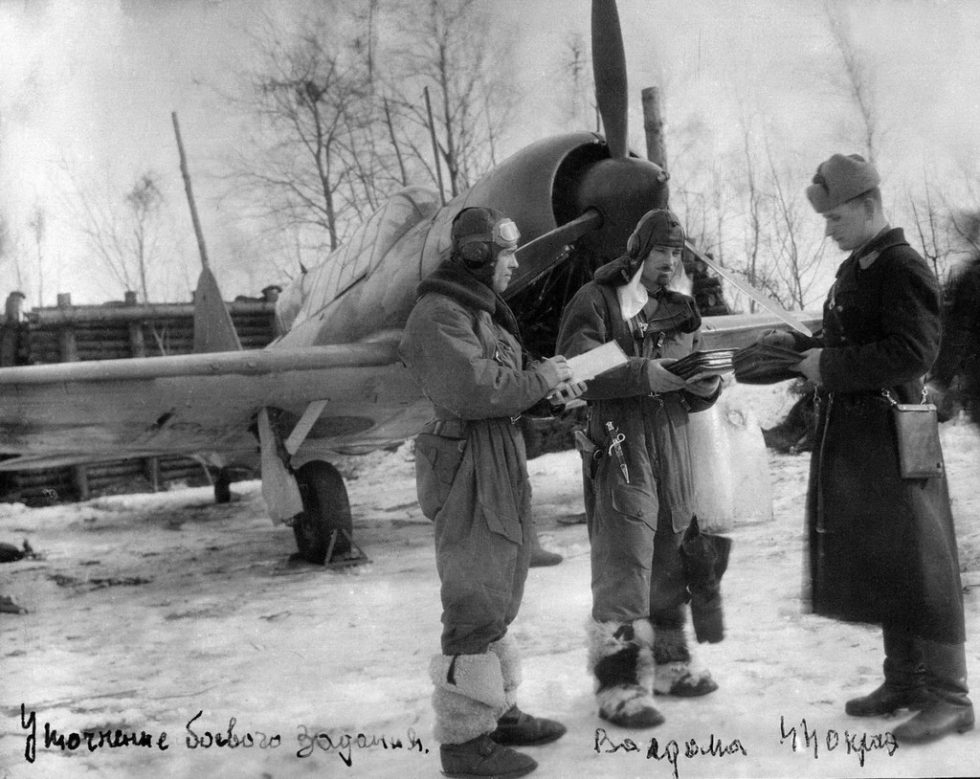
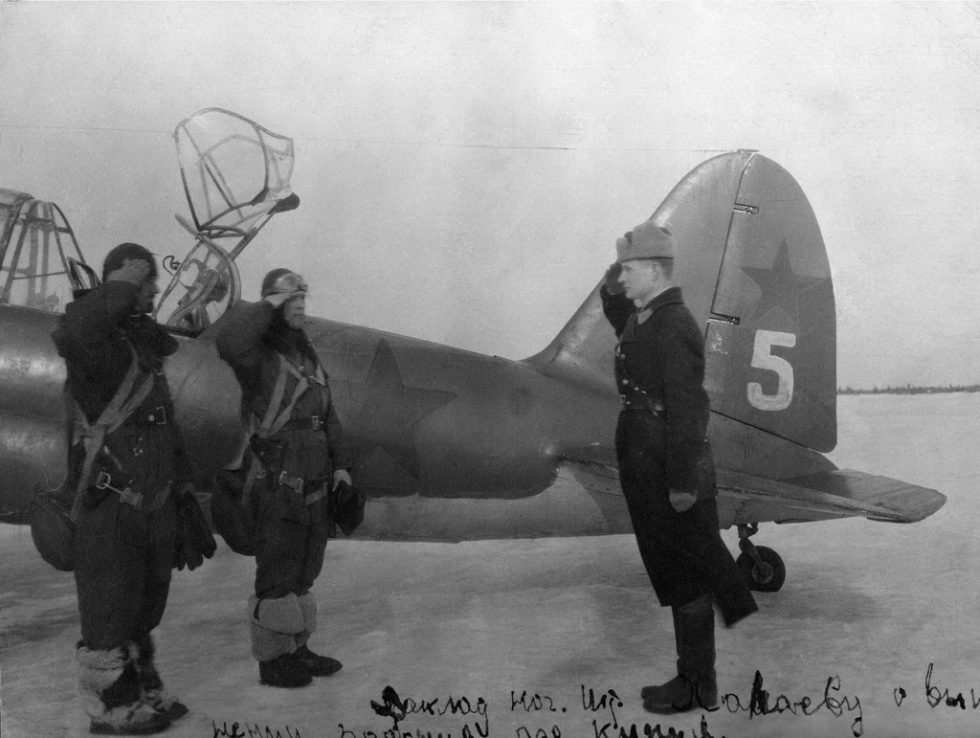
The Su-2 in pictures
The Su-2 in motion
Epic Soviet Documentaries: Sukhoi Su-2 Light Bomber Plane — a short archival profile of the type, its origins in the “Ivanov” programme and its hard war service.
Where the Su-2 flew
The Su-2’s war in numbers
The Su-2 was a light bomber and scout, not a fighter, and its record is one of sacrifice rather than aerial victories. Committed to unescorted daylight bombing in 1941, it took punishing losses before being pulled back to reconnaissance and artillery observation. Its most famous moment in the air was not a kill but a ram.
Compare the combat record of every military aircraft. Figures are best estimates from the sources below.
Everything people ask about the Sukhoi Su-2
Can I fly in a Sukhoi Su-2?
What was the Sukhoi Su-2?
Who designed the Su-2, and why does the name matter?
Was the Su-2 any good?
Did a woman really ram an enemy plane in a Su-2?
How many Su-2s survive today?
Why was the Su-2 retired so quickly?
You can’t fly the Sukhoi Su-2.
These, you can.
Some legends only live in museums — others are fuelled and waiting. MiGFlug has put civilians in real military jet cockpits since 2004.
 Fly the L-39 AlbatrosThe world’s most-flown jet trainer — aerobatics included
 Fly the F-104 Starfighter“The missile with a man in it”
 Fly the MiG-21The Cold War’s most-produced jet
 Fly the T-33 Shooting StarAmerica’s first jet trainer
 Fly the DH VampireA piece of early jet history
 Fly the S.211Agile Italian jet trainer
 Fly the MB-326The classic Aermacchi jet
 Fly the MiG-15The Soviet legend of the Korean War
Continue the tour
Every fact, checked
- Military Factory — Sukhoi Su-2Development history, specifications and production figures for the type.
- Aviastar — Sukhoi Su-2Technical data, variants and the ANT-51/BB-1 lineage.
- Russia Beyond — Yekaterina ZelenkoThe story of the only woman to carry out an aerial ram, flown in a Su-2.
- Smithsonian National Air and Space MuseumReference for Soviet WWII aircraft development and the Sukhoi design bureau.
- Imperial War MuseumsContext on the 1941 Eastern Front air war in which the Su-2 fought.
- AirVectors — Sukhoi Su-2 / Su-4Narrative history of the design, its engines and its combat career.
- Wikimedia Commons — Su-2 mediaSource of the archival and museum photographs used on this page.