
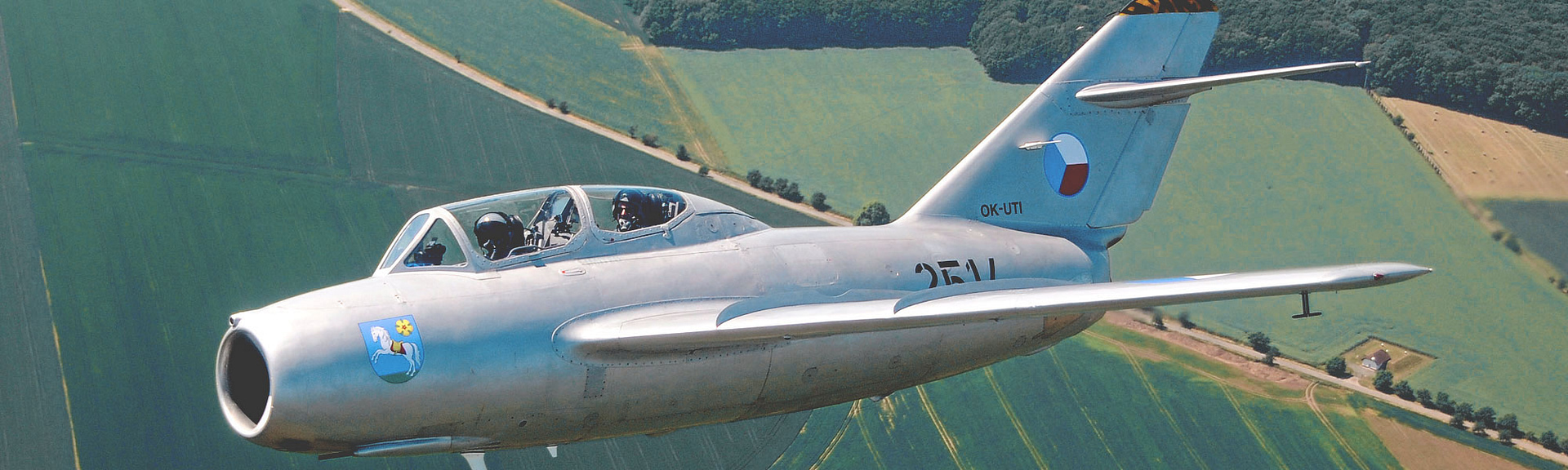
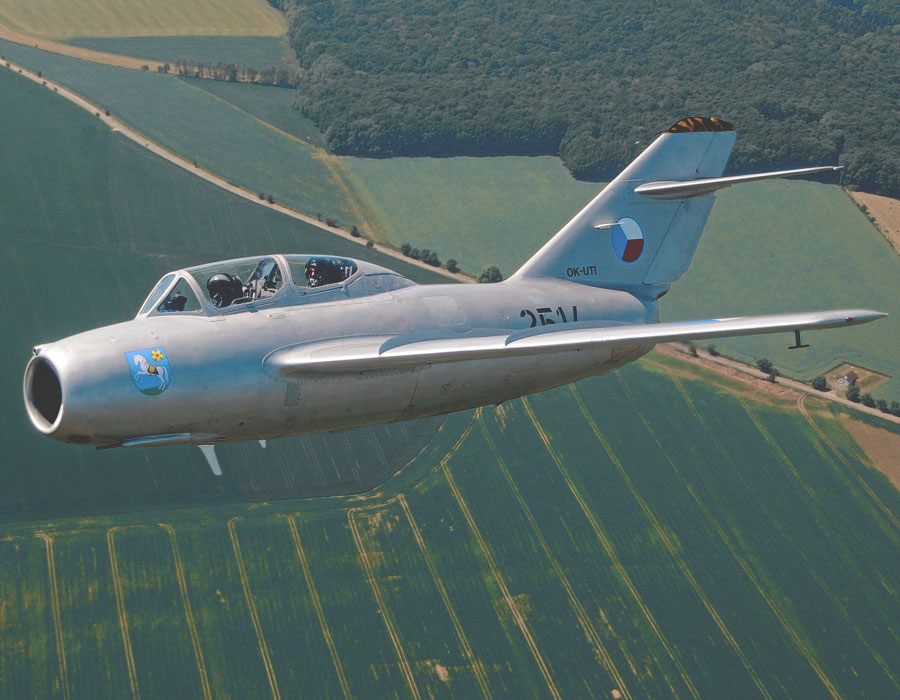
MiG-15. Cold War Steel.
Designed by Mikoyan-Gurevich in the Soviet Union and powered by a reverse-engineered Rolls-Royce Nene turbojet, the MiG-15 was built for a single purpose: to dominate the skies over Korea. Over 13,000 were produced in the USSR alone, making it one of the most-manufactured jet aircraft in history. With its rugged airframe, twin 23mm and single 37mm cannon, and a service ceiling of 50,900 feet, this is not a museum piece that flies like a fighter — it is the fighter that shocked the West.
A Soviet Gamble That Paid Off
When the Mikoyan-Gurevich design bureau began work on the MiG-15 in 1946, Stalin had refused to believe the British would ever sell the Soviets their best jet engine technology — yet that's exactly what happened. Drawing on this windfall Rolls-Royce Nene engine and German wartime swept-wing research, the team applied a single-minded philosophy to the design: the smallest possible airframe wrapped around the most powerful engine that would fit. The result was one of the most consequential jet fighters ever built — adopted by over 35 nations and later evolved by Mikoyan into the MiG-17, the jet that would go on to challenge American supersonic fighters over Vietnam.
- 1. Soviet Engineering Pedigree
Designed by Mikoyan-Gurevich and built around a windfall British turbojet, the MiG-15 brought ruthless simplicity to the jet age. Over 13,000 were built in the USSR alone. - 2. Combat-Proven in Korea
The MiG-15 fought F-86 Sabres over "MiG Alley" along the Yalu River — the first jet-versus-jet air war in history, and the proving ground that defined a generation of fighter design. - 3. Devastating Firepower
One 37mm N-37 cannon and two 23mm NR-23 cannons gave the MiG-15 enough punch to bring down a B-29 bomber in a single pass. This was a fighter built to kill, not to impress. - 4. Bubble Canopy
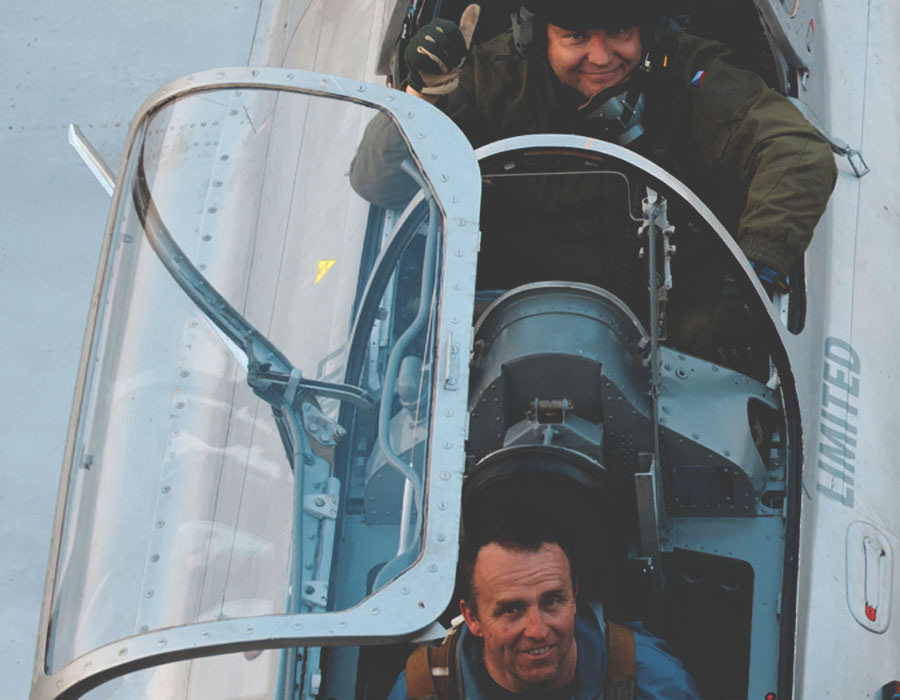
A clear bubble canopy gives the pilot an unobstructed, all-around field of view — the same sightlines that helped Soviet aces dominate the skies over the Yalu River. - 5. Proven Powerplant
The Klimov VK-1 turbojet — a reverse-engineered and uprated version of the Rolls-Royce Nene — delivers nearly 6,000 lb of thrust with the same rugged reliability that kept MiGs flying from austere airstrips for decades. - 6. 50,900 ft Service Ceiling
Few fighters of its era could out-climb the MiG-15. It can reach nearly 16,000 metres — putting you above the weather and into the deep blue where the curvature of the Earth begins to appear.
MiG-15 Design and Airframe
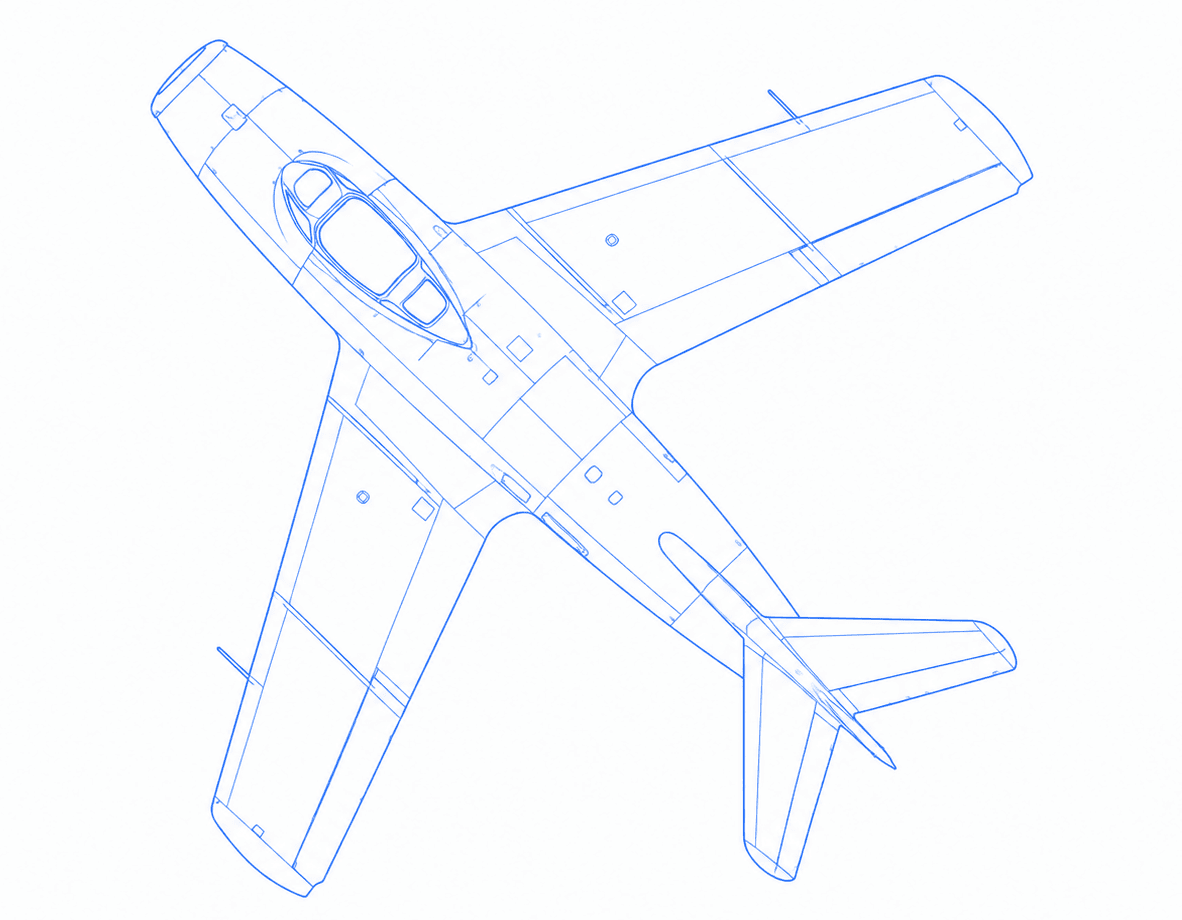
The MiG-15's design reflects a distinctly Soviet approach to engineering: ruthless simplicity, nothing wasted. A single Klimov turbojet fed through a split nose intake, with the cockpit tucked above and behind it. All-metal construction kept the airframe rugged and easy to repair in the field, even on austere frontline airstrips. The 35-degree swept wing — drawing on captured German research — gave it a decisive edge over straight-winged jets in transonic flight. Over 13,000 were built across the USSR, with thousands more under licence in Czechoslovakia, Poland and China, but the design proved so sound that Mikoyan evolved it into the MiG-17 — the jet that would go on to challenge American fighters over Vietnam.
MiG-15 Interactive Blueprint
Bubble Canopy Cockpit
A single-seat cockpit under a clear bubble canopy, giving the pilot excellent all-round visibility — a major improvement over earlier framed-canopy fighters.
MiG-15 operations worldwide
Over 13,000 MiG-15s were built in the USSR alone — and Mikoyan-Gurevich made up for nothing, because there was nothing to make up for. A rugged all-metal airframe, a turbojet derived from the world's best engine of its day, and handling sharp enough to fight the first jet-versus-jet air war in history over Korea. Flown by more than 35 air forces across four continents, the type saw action from MiG Alley to the Suez Canal to the skies over Taiwan. The interactive map below shows every nation where the MiG-15 has served.

MiG-15 Technical Data
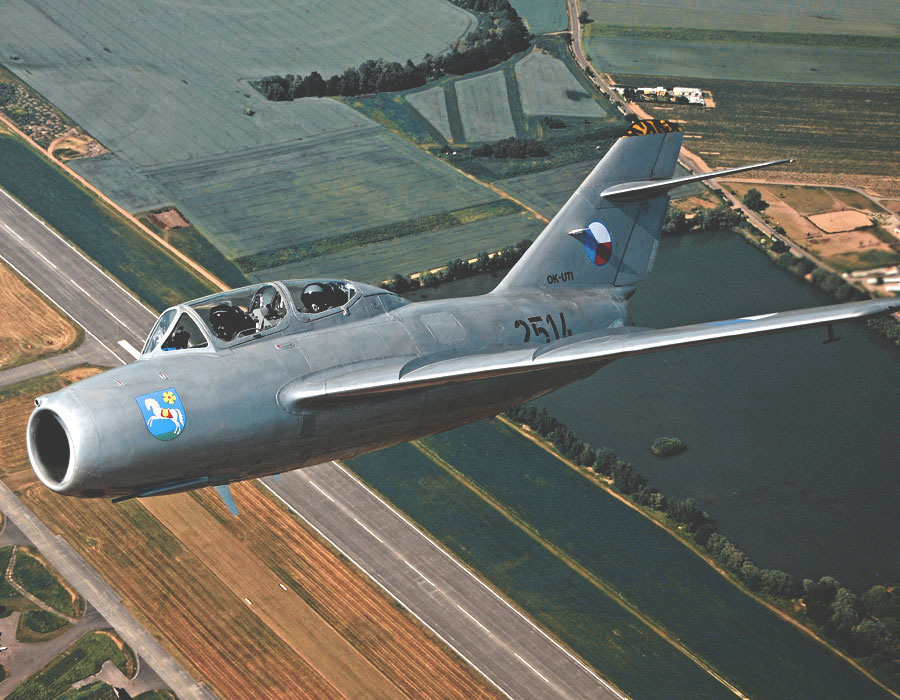
The MiG-15's engineering is as purposeful as its reputation. A single turbojet mounted inside the fuselage, fed by a split nose intake ahead of the cockpit. Sturdy tricycle landing gear tough enough for rough Soviet airstrips. Hardpoints for rockets and bombs. The result: an aircraft that's punishing to fly badly but devastating in skilled hands, easy to maintain and ruthlessly effective. Adopted across the entire Warsaw Pact and beyond, the MiG-15 went on to become one of the most widely produced jet aircraft ever built, with over 13,000 produced in the Soviet Union alone. Its success spawned a direct successor — the MiG-17 — but none have matched the original's role in reshaping aerial warfare.
m
WINGSPAN
m
LENGTH
m
HEIGHT
km/h
MAX SPEED
km
RANGE
m/s
CLIMB RATE
m
SERVICE CEILING
kN
ENGINE THRUST
For aviation enthusiasts who want to go deeper, here is a broader technical snapshot of the MiG-15.
| Crew | 1 (2 in UTI trainer variant) |
| Engine | Klimov VK-1 centrifugal-flow turbojet |
| Maximum thrust | 2,700 kgf / 5,950 lbf |
| Maximum speed | 1,075 kph / 668 mph |
| Never exceed speed | Mach 0.92 |
| Cruise speed | 974 kph / 605 mph |
| Range | 1,250 km / 675 nm |
| Service ceiling | 15,500 m / 50,900 ft |
| Rate of climb | 2,800 m/min / 9,200 ft/min |
| Wingspan | 10.08 m / 33 ft 1 in |
| Length | 10.10 m / 33 ft 2 in |
| Height | 3.70 m / 12 ft 2 in |
| Wing area | 20.60 m² |
| Empty weight | 3,680 kg / 8,115 lb |
| Max take-off weight | 6,106 kg / 13,460 lb |
| Internal fuel | 1,400 L / 370 US gal |
| Armament | 1× 37mm N-37 + 2× 23mm NR-23 cannon |
| Hardpoints | 2 underwing for rockets or bombs |
| Max external load | 250 kg / 550 lb |
| Ejection seat | Explosive cartridge type |
Why the MiG-15 is a class apart
One of the rarest pieces of Cold War history available for civilian flight experiences anywhere in the world. With over 13,000 ever built, the MiG-15 offers something extraordinary — Soviet ruggedness, devastating cannon firepower, and the same cockpit that fought the first jet-versus-jet air war in history.
Built to Dogfight
A 35-degree swept wing and razor-sharp control response give the MiG-15 handling that defined a generation of fighters. This is the airframe that taught the world swept wings win wars.
Flying Over Bohemia
Available for jet flights from the Czech Republic — birthplace of the licence-built S-102 and S-103 variants. Fly the same skies where Warsaw Pact pilots once trained on this very type.
A True Cold War Icon
The bubble canopy and needle-nose silhouette made the MiG-15 instantly recognisable on both sides of the Iron Curtain. No other military jet available for civilian flights carries this much history in its profile.
Fly a MiG-15
Select a location and make your dream of flying a real Cold War fighter come true.
